The vast majority of parents hope that their children will succeed, at least subjectively. The subconscious situation of not wanting children to surpass oneself is not non-existent, and there are almost none who are willing to admit it.
Setting aside these debates, let’s now summarize several educational models that can hinder children’s success:
The first type is the doting mode.

This is an educational model for cultivating “giant babies”. Parents should fulfill all their children’s requirements and take care of everything they can. Parents’ backpacks for children going to school, parents cleaning for children on duty, children doing homework, parents providing guidance, as well as organizing textbooks and materials. Such parents take care of their children meticulously, but they forget their responsibility to provide social training for their children.
Children who grow up in overindulgence have low self-care ability, insufficient ability to interact and cooperate with others, and weak ability to withstand setbacks and pressure. Such people find it difficult to coexist harmoniously with others, whether in school, work, or society, after leaving their families. They not only make people around them stay away, but they also feel confused, lonely, and painful themselves.
In today’s society, people who are good at cooperation are more likely to succeed. Those who are stuck in a self-centered infant state miss too many classes at this point.
Who is to blame for raising without teaching, or for teaching poorly?
The second type is the authoritarian model.

In such families, the father or mother is the undisputed leader, implementing a parental system and a one size fits all approach. The will of the ‘leader’ cannot be challenged, beyond doubt, and the decisions of the ‘leader’ cannot be changed. In such a family, other people do not have their own autonomy, and everything must be “led” by the final say. If there is resistance, all will be ‘suppressed’. If it is too hard, soft methods such as moral blackmail and emotional extortion will be used. In short, we will not stop until we achieve our goals.
Such parents may not necessarily intentionally disregard the interests of their family. On the contrary, they believe that only doing things according to their own plans is the only correct choice, and this is all for their own good. Ultimately, this kind of parental view of the world is mechanical and negative, mostly narrow and rigid. They are filled with anxiety and fear towards uncertain things, and extremely resistant to situations beyond their own cognition and control. For the sake of so-called ‘absolute safety’, they often forcefully handle their family’s personal affairs, from studying to choosing a career, from choosing a spouse to raising children.
This ubiquitous control often prevents children from fully developing their interests and talents, choosing majors and jobs according to their own wishes, and even deciding their marriage partners and lifestyle, living like puppets and zombies.
People who grow up in this mode often have only two choices: either give up on themselves and let their parents arrange; Or bear the charge of “unfilial” and draw a clear line with parents.
Neither option can achieve the best of both worlds, often resulting in a lose lose situation.
The third type is the neglect mode.
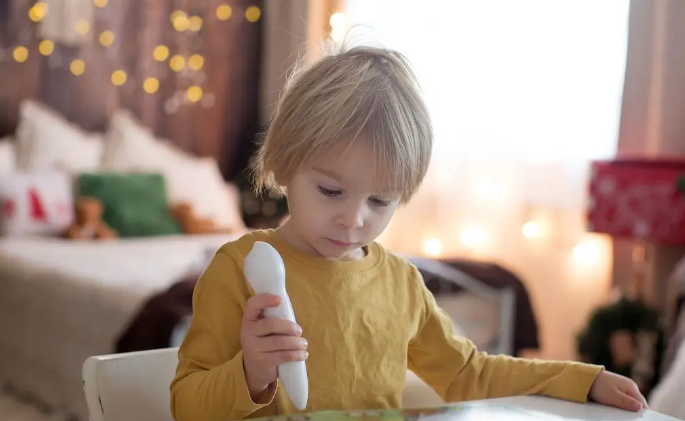
Neglect type, also known as laissez faire type, refers to a family under the same roof who turn a blind eye to each other, called family members, and are like passersby. There is no smoke or fire at home, no family affection, and indifference permeates everywhere. People who grow up in such an environment often doubt their own existence value. Even the closest parents treat themselves as mere air, or even as a burden or injustice. How can they have any sense of value or existence? No wonder some children may fall in love early or be tempted by negative groups, and become completely devoted. Their world is too desolate, whether with ulterior motives or genuine intentions, any warm place is too attractive to them.
Compared to others, the neglect mode may cause the greatest psychological damage to children.
There is a saying on the internet that goes, ‘Don’t always hurt yourself in childhood.’ It aims to encourage people to go beyond the influence of their original family and not be bound by the past when they grow up. Instead, they should be their own masters and saviors.
I personally strongly agree with this concept.
The past is the foundation of the present, but ultimately it has passed. The future depends on our choices today.