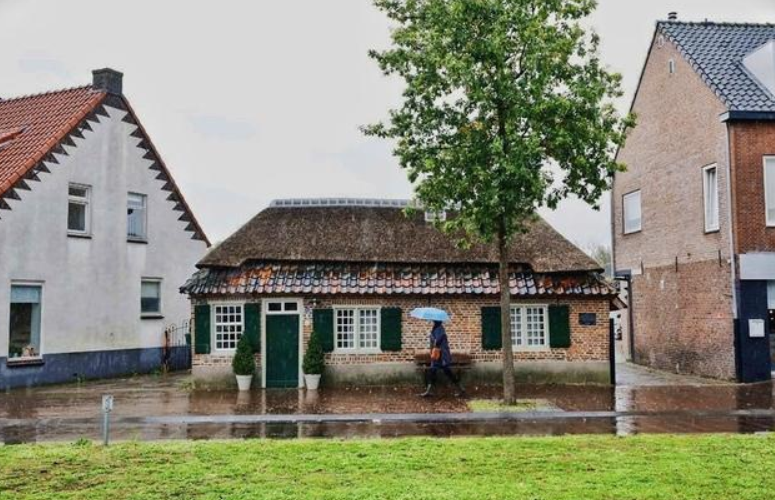
If Vermeer is the star of Delft in the Netherlands, then the small town of Nuenen not far from Eindhoven takes pride in Van Gogh. If it weren’t for Van Gogh, this seemingly ordinary town of Nuenen might have remained as unknown as other European towns, or it might have changed from what it was a hundred years ago. With the presence of the painter, Nuenen’s appearance has remained in the era when Van Gogh lived and has become one of the most important must-visit spots in the Netherlands on the journey to find Van Gogh.
Nuenen was not the place where Van Gogh was born. He only lived in this small town with his family for two short years from 1883 to 1885. However, these two years can be said to be the most important two years of Van Gogh’s life. He created a quarter of his paintings in Nuenen, among which was his first representative work, “The Potato Eater”, which he considered the most satisfying. From then on, the foundation for the subsequent artistic path was laid.
Van Gogh was the greatest painter of the 19th century. His talent and passion were transformed into his works, such as wheat fields, starry skies and sunflowers, which were as passionate and unrestrained as flames. In a certain sense, however, Van Gogh was not “successful” during his lifetime. He was poor and destitute, selling only one painting in his life and even unable to support himself.
At the age of over 30, I still have to live with my parents in an old house in Newnan. In this old house, Van Gogh had his own “studio” for the first time. In a low laundry room of less than ten square meters, Van Gogh set up his easel and focused on his creation, leaving behind a large number of works.
In love, he also endured the pain of loneliness. His first successful love interest was Margot, a single mother 13 years his senior. Berg, who lived right next door to his home, entered Van Gogh’s life because she needed to take care of his sick mother. She fell in love with Van Gogh, who had red hair at that time, but was opposed by both families. Berg was unable to marry Van Gogh, so she chose to commit suicide. Although she was rescued, this romance eventually came to nothing. To this day, a statue of her still stands in front of Margot’s former residence.
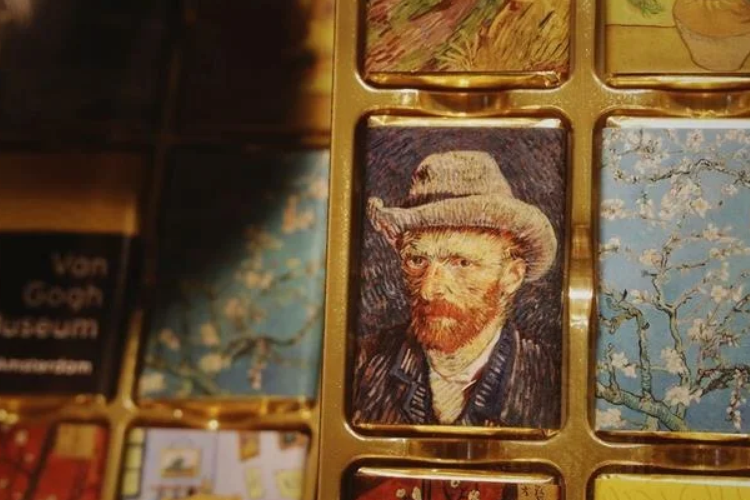
The small building opposite has been transformed into the Van Gogh Museum, which houses over 200 precious oil paintings and more than 580 sketches. It records Van Gogh’s life and creative journey in Nuenen in multimedia form. Of course, most of the souvenirs on the first floor are related to Van Gogh. The second and third floors are memorial halls dedicated to Van Gogh. Many memorials related to Van Gogh have been collected for exhibition. The only three self-portraits of Van Gogh during his lifetime are also on display in the memorial hall. This is the starting point for tourists to search for Van Gogh’s relics. Even locals come here for a cup of coffee and to chat about the past when they have nothing to do.
For over a hundred years, Nuenen has been striving to avoid any changes. The places where Van Gogh once lived, the scenes depicted in his paintings, the churches, the wooden houses and the post offices, remain the same as they were back then. To facilitate Van Gogh fans around the world in discovering every detail of Van Gogh, the town has summarized 18 related relic sites, and each story is thought-provoking.
The residents of the small town are also proud of Van Gogh. Just chat with anyone and you can feel their admiration for the painter’s talent and ability, which is like a mighty river. Our elderly tour guide has been giving free explanations for 30 years and is extremely familiar with Van Gogh’s stories. Following him to search for Van Gogh’s relics in the rain, apart from the official history in textbooks, what is even more fascinating are the painter’s gossipabout and romantic past.
In 1884, Van Gogh once recorded the church where his father preached in a painting. Today, the appearance of this church has almost remained unchanged and still retains its original look. The prototype of the character in Van Gogh’s famous painting “The Potato Eater” was a poor local weaver and farmer who once lived in a small house in the town. Now that the person has passed away, the house is still well-preserved.
The Upwittens Water Mill where we had lunch is also one of the scenes in Van Gogh’s paintings. The wooden structure from a hundred years ago is still preserved. The passage of time has made the house more mottled, and it looks even more weathered in the rain. However, it has now been transformed from a mill into a restaurant, offering very popular local cuisine.
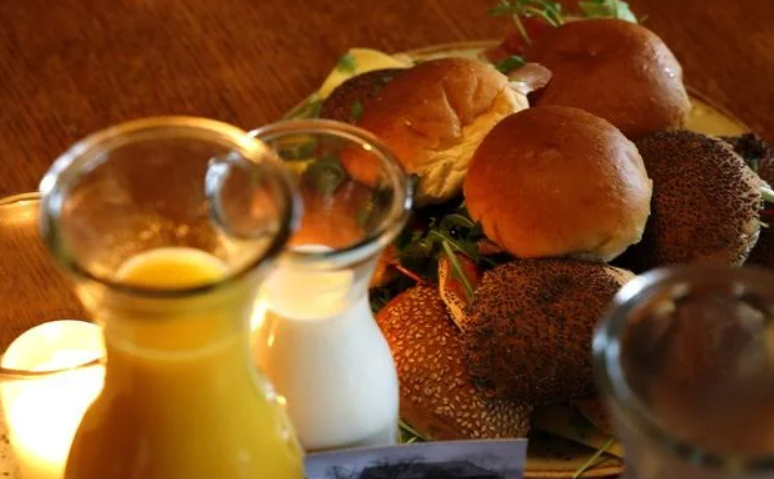
I ordered the most traditional Dutch lunch, a small bread filled with sausages and cold milk. This might have been considered a sumptuous feast in Van Gogh’s time. Only by understanding the little things in Van Gogh’s life can one have a deeper understanding of the master’s growth process.