The role of “child” in parent-child relationships has two meanings, one is the identity of the child role, and the other is the psychological state of the child.

Some people may have reached adulthood based on their physical age, but they are still immature psychologically and do not want to grow up.

Some people, regardless of whether they are physically adult or not, and regardless of their abilities or achievements, simply cannot break through their parents’ control and cannot be independent and autonomous in their adult state. They want independence, but their parents do not allow it.
People who do not want to grow up, and those who originally wanted to grow up but succumbed to their parents’ will, are prone to problems in their parent-child relationship after becoming parents themselves.
The former, due to their immature personality, is accustomed to relying on and being taken care of, and may regard their children as objects of dependence, causing the reversal of parent-child relationships and adding extra burden to their children.
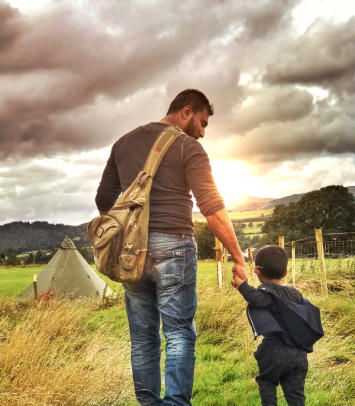
The latter, due to the inability to gain independence in their relationship with parents and the lack of experience in correctly getting along with two generations, is prone to extending this pattern to their own children, becoming the new generation of parents who do not allow their children to grow up.
Both of these situations are manifestations of unclear interpersonal boundaries, which are not conducive to the healthy growth of oneself and children.
Becoming the person we want to be is the fundamental driving force for our growth, and it is also the second part of the self-identity task of ‘what I am now, what kind of person I want to become’. How well this task is completed determines our evaluation of ourselves and our state in the final stage of life.