
Wanting to eat ice cream but fearing to gain weight reveals the contradictory mentality of many people when they consume it in summer. Today, I’ll teach you a few ways to pick ice cream.
Choosing a small ice cream is suitable for satisfying your craving in one go and controlling your total calorie intake. Many ice creams come in small or mini sizes. A tiny one can satisfy your craving and has a low calorie count, making it the perfect afternoon tea in summer. For instance, a mini multi-flavored fruit Popsicle with a net weight of only 20 grams and a calorie count of just 23 kilocalories. Ice cream (Popsicle) ≤100 kilocalories per stick, you can eat it with peace of mind. 100 to 200 kilocalories per tube, consume in moderation. ≥200 kilocalories per bottle. Try to eat less!
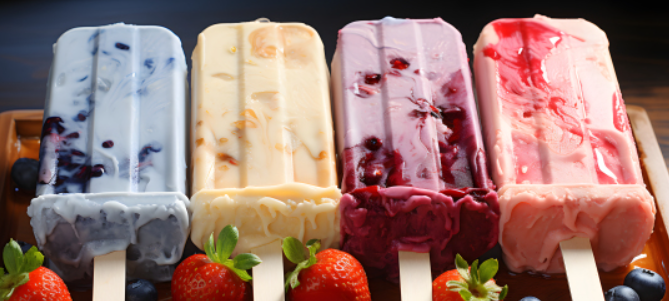
The ingredient list in the ingredient list is sorted by content from high to low. If ice cream (popsicles) has drinking water and white granulated sugar ranked first and second, it indicates that the product has less milk, a higher proportion of sugar, and a lower nutritional density. When choosing an ice cream (Popsicle) ingredient list, it is advisable to select ingredients with high nutritional density, such as pure milk, nuts (hazelnuts, pistachios, etc.), fruits (grapes, watermelons, blueberries, mangoes, durians, bananas, strawberries, etc.), miscellaneous beans (mung beans, red beans, etc.), and tubers (yams, purple sweet potatoes, taros, etc.). The earlier these ingredients are placed, the higher their content. Fresh milk ice cream with sugar but moderate sweetness, if the amount of raw milk added is more than 50%. And those popsicles with drinking water and white granulated sugar at the top are, to put it bluntly, similar to “frozen sugar water”, providing only calories and having relatively low nutritional value.
In addition, it is best that the ingredient list does not contain preservatives, margarine, artificial colors or flavorings.
Pay attention to the nutrition facts table. The nutrition facts table is a key reference for people who need to strictly manage their weight and blood sugar. Pay close attention to six key indicators: energy, carbohydrates, protein, fat, sugar, and trans fatty acids. Try to choose ice cream with low energy, carbohydrate, fat, and sugar content but high protein content (generally, ice cream with a protein content of ≥3 grams per 100 grams is considered to have a high protein content). (Low energy: energy ≤170 kilojoules per 100 grams; Low fat: Fat ≤3 grams per 100 grams; Low sugar: Sugar ≤5 grams per 100 grams; High protein: Protein content ≥12 grams per 100 grams, preferably free of trans fatty acids or with very low content.