“Mother and daughter from East Asia” has been a hot topic in recent years. In East Asian societies, the relationship between mothers and daughters seems particularly complex. They love each other but always hurt one another. Daughters from East Asia often say, “When I grow up, I don’t want to be like you.”
This might be a unique predicament that women face in the current social environment. If a child has a problem, it is much easier to blame the mother than the father. “For mothers, they will lower their heads and offer their necks to accept punishment without waiting for experts to convict them.” Where exactly does a mother’s sense of responsibility come from? Is it the so-called “maternal instinct” that drives mothers to act this way, or is it the social environment that makes mothers bear too much responsibility, which eventually evolves into excessive control over their daughters?
In the following text, psychologist Kaoru Saito meticulously analyzes the influence of feminine traits on mother-daughter interaction and discusses the underlying mechanisms of domination and being dominated in the mother-daughter relationship. Perhaps, a perfect mother does not exist. One great gift a mother can give her daughter is to live her life as well as possible.
The following article is excerpted from “Psychoanalysis of Mother-Daughter Relationships: The Dominated Daughters”. The subheadings are proposed by the editor and are published with the authorization of the publisher.
01.
Unconditionally trusting in the “maternal instinct”
It’s actually a child.
What exactly is motherhood? Does the so-called “maternal instinct” really exist?
Based on Lacanian psychoanalysis, I do not recognize all “instincts”. Instinct refers to the preconceived behavioral patterns at the genetic level, such as the dance of bees and the swimming of salmon, which can be accomplished without experience or learning. Such innate behaviors can be called instincts.
One of the most frequently mentioned areas of the term “instinct” is “maternal instinct”, which refers to the spontaneous behavioral patterns of female animals in order to raise or protect their young. Then, do humans also have the same behavioral pattern?
The French intellectual historian Elisabeth Badande made a thorough criticism of the so-called maternal instinct of human beings:
Is maternal love an instinct or merely a concept shaped by The Times?
Tracing the historical changes in mothers’ attitudes towards their children, some wonderful facts can be discovered. In the 18th century, of the 21,000 babies born in Paris each year, only 1,000 were raised by their biological mothers, another 1,000 were cared for by live-in wet nurses, and the rest were sent to foster families. Many of these children died without having met their biological mothers. The phenomenon of abandoned babies, which emerged in the 17th century and became widespread in the 18th century, transformed into the mainstream narrative of mothers sacrificing themselves for their children in the 19th and 20th centuries.
Can this kind of maternal love that comes and goes, positive or negative, or even returns to zero, be called instinct? Looking back over the past four centuries, we will find that over the past 150 years, from Rousseau, who advocated that mothers should devote themselves to their children, to Freud, who only regarded mothers as the core influence of their children, all have contributed to shaping similar female images. In modern society, an increasing number of women hope to showcase their all-round personality. Maternal love, perhaps like paternal love, is not instinctive but a kind of love that is added later in life.
— Beyond Love, 1980
Of course, even if the data Badande listed is true, it remains debatable whether it can directly lead to the conclusion that “maternal instinct does not exist”. These data can lead to the conclusion that maternal instinct is the product of social and cultural construction. The opposite conclusion can also be drawn – social culture suppresses maternal instincts.
If statistical data is used to construct human nature, it is very easy to obtain a hollow model similar to Adam Smith’s “economic man” – an abstract concept that fails to evoke any resonance. The economic man, also known as the beneficial man, is a human model in economics that assumes humans are completely rational beings who act solely based on their own gains and losses. This assumption is convenient in economics, but almost no one considers this model to be closely related to themselves.
Acknowledging or denying maternal instincts is bound to be highly politically charged. Feminists thoroughly criticize the term “maternal instinct” because it is an essentialist tool that has long oppressed women.
The position of psychoanalysis also starts from the denial of this instinct. Ultimately, psychoanalysis itself is about exploring what a “human being” is by keeping a distance from genes and the brain as much as possible, so it is quite natural to choose this stance.
Subcultures are often the pioneers of suspicion. For instance, the manga “Little Progress, Big Shock” by Go Nagai is a masterpiece of horror on this theme. The story is about a day when adults suddenly start killing children. The mother violently kills the child, the police shoot at the child, and a school teacher kills a student. The scene is filled with wailing and despair.
There is a scene that leaves a deep impression: a group of children are trying to escape the killing and discussing why such a thing happened. A bespectaled teenager, who is clearly a top student, believes that humans have maternal instincts. The other teenagers retorted, “Has anyone ever seen maternal instincts with their own eyes?” Perhaps it never existed from the very beginning. Despite this, the protagonist, Kojin, still chose to trust his mother. When he got home, his mother, with a smile on her face, waved the kitchen knife at his neck without hesitation.
The shock brought by this work varies from person to person, and its degree depends on the depth of the audience’s reliance on the fantasy of maternal instinct. I read this comic myself over twenty years ago, and it almost formed a traumatic experience. I still clearly remember the plot and main scenes to this day.
It is actually the child himself who unconditionally trusts his maternal instincts. As an extremely fragile existence, children can only find inner peace by firmly believing in the absoluteness of blood ties and their mother’s unconditional love. From my experience, this kind of maternal dependence is stronger in men than in women – perhaps this is a unique phenomenon in Japan, after all, Japan is a country with a strong sense of motherhood. In contrast, women began to doubt motherhood at an earlier stage.
In fact, the image of motherhood does not have a very long history. The 18th-century French thinker Jean-Jacques Rousseau played an important role in shaping the image of motherhood in modern times. Rousseau believed that “the earliest education of mankind relied on the care of women” (Emile), and he thoroughly criticized the selfishness of mothers and attributed the responsibility of educating and disciplining children entirely to mothers.
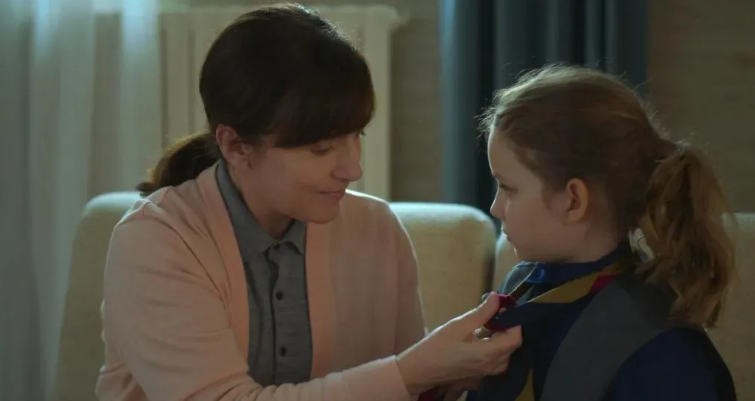
The ideal image of a mother essentially encompasses dedication, masochistic tendencies and passivity. Those women who do not focus on raising children or refuse to become mothers have their very existence denied. Rousseau’s demand that all mothers be completely devoted to their children has, in an intangible way, implanted a sense of guilt in the hearts of many women.
From this, we might be able to see the opportunity for modernization to shift from “disliking motherhood” to “disliking women” (Badande later criticized Freud, and her understanding of Freud seems overly simplistic, which I cannot fully agree with). In fact, it was precisely within the theoretical framework of Freud-Lacan that the maternal instinct was completely negated for the first time.
02.
Accepting the mother-daughter relationship is
Recognize the relationship between domination and being dominated
By now, you may have noticed that the problems in the mother-daughter relationship are always described from the daughter’s perspective. It is ideal to have a relationship from the perspectives of both sides, but it is not an easy task. Generally speaking, mother-daughter relationships are always asymmetrical. To put it in a more extreme way, the pattern of the mother-daughter relationship is always “mother = perpetrator, daughter = victim”. If there are any problems here, it is understandable that most of the complaints are made by the victims.
Daughters are troubled by their mothers’ control, and mothers often have no awareness of their own dominant behavior. So, the problems between mother and daughter seem to be observable only from the daughter’s perspective.
Ultimately, the two consciousnesses of “I gave birth to you” and “you gave birth to me” are unequal in any sense. The former has physical perception (you made me hurt so much) and can make self-assured declarations. The latter may not have such self-awareness in perception. The self-awareness of “I am your child” does not come from physical perception.
Some people say that a person can clearly know that they are born to their mother, but whether they are the father’s child remains ambiguous. From the child’s perspective, there is actually not much difference. The identities of the father or the mother are all facts that have been informed, and there is a lack of conclusive evidence.
The certainty that “this person is my mother” can only be established through repeated declarations of “It was I who gave birth to you”. So, accepting the mother-daughter relationship, in a sense, means accepting asymmetry and recognizing the relationship of domination and being dominated.
Perhaps someone might point out, “Isn’t the relationship between a mother and her child different?” It’s different. The son is always able to stand in the position of dominating his mother. The unstable factors in a relationship where a son, as the “gender that leads to pregnancy”, can even enable the mother to give birth to a child for him always exist. The daughter, however, does not have the possibility of reversing the relationship. The most a daughter can do is either “resist” or “leave”.
Of course, there are also cases of hikikomori where daughters use violence to control their mothers. However, a careful analysis reveals that this kind of domination contains paradoxes. For instance, when a daughter makes her mother obey her every word through childish and regressive behavior, this kind of behavior actually strengthens the dependent relationship and indirectly acknowledges the mother’s position as the dominant one.
A son may also have a similar relationship. But the son can control his mother in different ways without regressing. If a daughter attempts to truly “retaliate” against her mother, she can only stand in her mother’s shoes and control her daughter in the same way, thereby prolonging the continuity of her control.
Obviously, every mother is also a daughter. What it is like for a mother to give birth to her own daughter has always been a mystery to me, which interests me very much.

In her book “The Meaning of Motherhood: How Children Can Change Your Life”, Harriet Lerner, based on her own experiences, meticulously analyzes the experience of women giving birth to daughters. As a psychologist specializing in children’s education, although she has a profound understanding of what “becoming a mother” theoretically means, she still has to draw such a conclusion: “Before we have children, we simply cannot know what changes they will bring to our innermost hearts.”
The distress that Lerner encountered in the actual process of raising her child was “control”, which was the root cause of many conflicts in the mother-daughter relationship. As for the extent to which a mother can control her child, Lerner wrote:
Most of the pain and sadness that mothers feel stem from our firm belief that we should control our children.
Pregnancy and childbirth are uncontrollable events. We cannot make a completely rational judgment on whether to have children or not. Women may choose to have a child due to irrationality and subconsciously. Therefore, “pregnancy is a lesson to learn to yield and be vulnerable.” The beginning of the problem lies in the fact that pregnancy and childbirth themselves are uncontrollable, which often leads women to a kind of fear: “Fear that I will become like my mother.” This fear might reach its peak at the moment when they go through pregnancy and childbirth and become mothers. The impossibility of control also means that even if one becomes like one’s own mother, it is impossible to avoid or get rid of it.
Perhaps, precisely because this fear is so intense, many women unconsciously “replicate” their mothers. By giving birth to one’s own child, one repeatedly confirms the correctness of one’s mother’s behavior. The saying “Only when you have children do you understand your parents’ kindness” perhaps refers to this kind of repeated confirmation.
03.
The cultural environment of society
It brought an excessive sense of responsibility to the mother
A certain magazine invited Harriet Lerner to write an article about the turning points or crucial moments in women’s lives. After a long period of reflection, the only moment that Lerner recalled was the day when he left the hospital with his newborn baby in his arms and returned home.
The moment I crossed the threshold of the hospital with Matthew (my husband) and stepped into the outside world, my life truly changed.
— “The Meaning of Motherhood”
Then, she used many details to describe how helpless and ignorant she was at that time, almost making efforts in the wrong direction. At that time, she couldn’t control the situation. Without the advice of hospital staff or experienced friends, she could hardly do anything.
Lerner emphasized “control” because in fact she had nothing to control. However, in most cases, people believe that mothers are one hundred percent responsible for family control, and mothers often come to believe this.
Lerner mentioned that she had felt a strong sense of responsibility for her son’s delayed development. For many mothers, this feeling is extremely intense and can even overwhelm rational judgment.
The relationship between a mother and her child is highly emotional and also physically dependent. The mothers who came to Lerner for consultation openly shared their physical and emotional experiences related to parenting. They talked about how they no longer wanted to sleep with their husbands after giving birth. How do breasts become loose or even almost disappear after raising one or two children? What they revealed in their words was uncontrollable anger, deep numbness and lack of interest, as well as tender feelings full of love, all of which were the intense emotions brought by infants.
The mothers told her that when the baby kept crying, they even thought of throwing the child out of the window. But it is also these mothers who are complaining that if their children really suffer misfortune, they will definitely not be able to survive.
What Lerner sensed from these confessions was an extreme protective instinct – the mothers’ obsession with their children’s health and safety, as well as the unbearable pain they endured when they found themselves unable to achieve this goal.
There is no doubt that the parent-child relationship becomes extremely special because of having experienced such intense emotions. The sense of responsibility formed within such a relationship is something that outsiders dare not comment on easily.
Lerner’s reaction to her son’s delayed development was anxiety and she had a conflict with her optimistic husband who tried not to worry. In her view, her husband always tries to disrupt her emotions. Even when something worrying happens, he remains calm and composed. Lerner also admitted that she frequently and excessively expressed her emotions, and Steve’s inclusive attitude enabled her to always be in a state where she could “speak freely without suppressing her feelings”.

In this way, many mothers gradually take on the role of “the person who responds emotionally” in the process of raising children. Compared with fathers who continue to work full-time after their children are born, mothers spend more time with their children. This further stimulated their sense of responsibility.
Although reason tells them not to take all the responsibility, they still can’t get rid of the thought: “When I was pregnant, it was my placenta that fell off.” It has been proven that my body is not trustworthy. Mother always feels that the responsibility for everything lies with herself and constantly doubts herself. Years later, when Lerner talked to her family about the scene at that time, she learned that her mother had also silently blamed herself for Matthew (Lerner’s son) ‘s delayed development, because it was she who had sent her daughter to fly over to visit her when she was pregnant.
Reading this, it is not difficult to find that all kinds of events that occur during pregnancy will profoundly shape a mother’s consciousness. This excessive sense of responsibility is clearly brought about by the cultural environment of the society in which the mother lived. After going through this series of experiences, many mothers are trapped in a contradiction: “Even though I feel extremely powerless and unable to control anything, I am still inevitably regarded by others as an all-powerful mother.” This makes them, even though they rationally understand that this sense of responsibility is unreasonable, still unconsciously tightly bound by the notion that “I should be responsible for all the results”.
以上翻译结果来自有道神经网络翻译(YNMT)· 通用场景
逐句对照
AI润