The legend of Noah’s Ark is well known to the world, but few people study where this giant boat carrying the hope of life finally berthed. The climax of the story ended quietly after birds returned to the sky and human beings moved into a new wilderness, and this end was precisely the beginning of another legend. Whether as a myth or history, in the cycle of beginning and end, in the change of joy and suffering, time itself has become the most permanent container to seal all stories.
According to legend, the final berthing place of the Ark is today’s Armenia. Armenian ethnic groups are famous for their business wisdom, but they are not martial people. Mount Ararat, which is respected by them as the “holy mountain” and is said to be not far from the legendary docking of the ark, is now mostly located within the eastern border of Turkey.
In my memory, from the window of Yerevan Hotel, from the vast vision of the artistic rooftop of Yerevan Stairway, from the ruins of Garni Temple in ancient Greek style, and even the winding road to Shenkeng Monastery, this snow-capped mountain always comes into view inadvertently.
Even after hardships, people still guard this land of their ancestors and the holy mountain in their hearts.
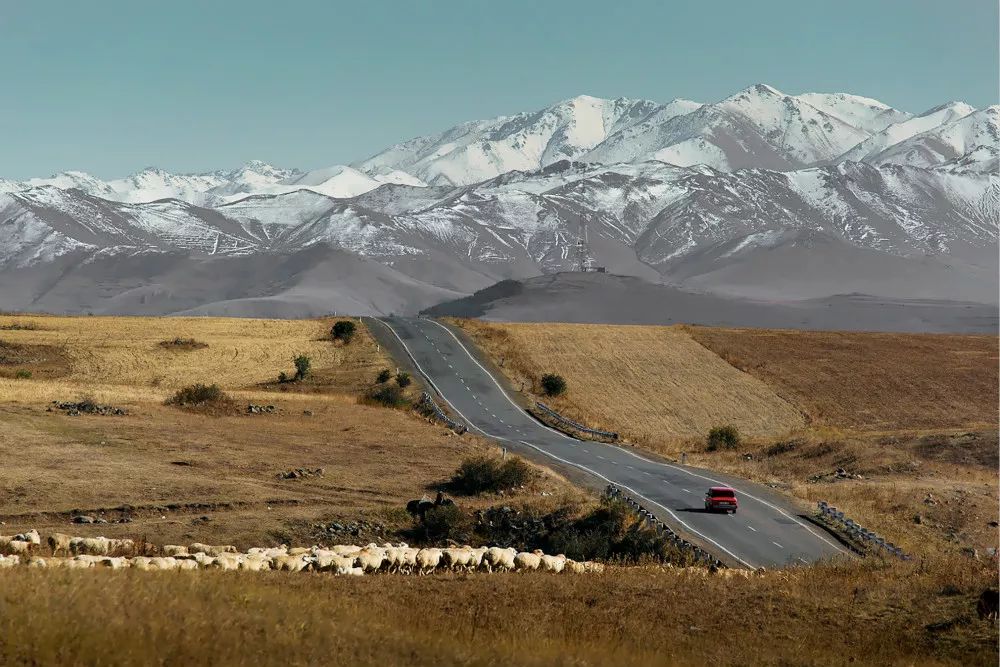
From the geographical pattern, Armenia today is like a land that survives in adversity.
It is almost surrounded by Muslim countries: it is bounded by high mountains and connected with Iran only by a narrow passage; The border with Azerbaijan in the east has been closed for many years, and there is no communication with each other; Due to the tragic events in the western history, the border with Turkey also opens and closes; Although the northern border is open with Georgia, which belongs to the Orthodox world, the relationship is delicate; Only Russia, the big brother of the former Soviet Union, has maintained close ties so far, and even its border defense affairs often depend on this northern neighbor.
From the perspective of economic reality, this “place of redemption” where the Ark can dock does not seem to be particularly favored by fate.
It has no access to the sea of its own, lacks abundant mineral resources, and only relies on limited agricultural exports to support the national economy. But what few people know is that it was the first country in the world to regard Christianity as the state religion (now mainly Orthodox Church). It is said that at the height of Armenia’s national strength, its territory was dozens of times as wide as it is today.
My initial understanding of Armenia originated from a group of black-and-white photos. There is not one person in the photo, but a row of young girls crucified. That group of images truly recorded the pain experienced by this country that has been gradually forgotten by the world, and also engraved a deep mark about this country in my mind.
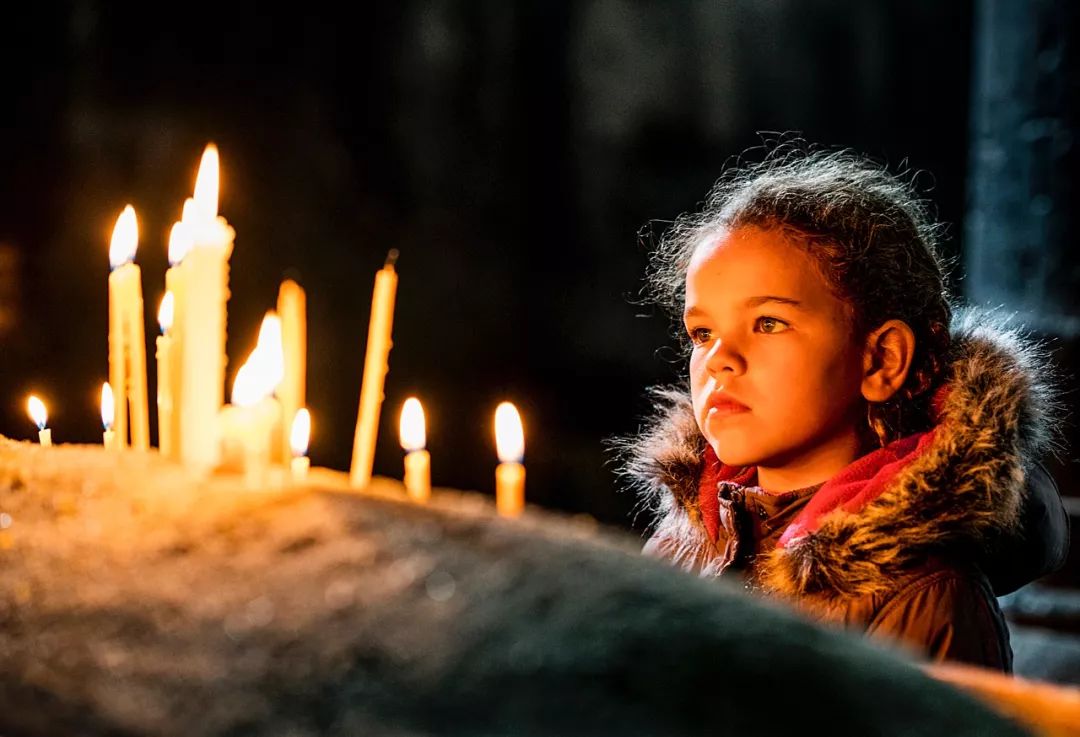
Beginning at night in Yerevan
The night in Yerevan, the capital, is neither the lights and crowds of domestic metropolises nor the coldness of European cities at night. In my memory of this city at night, it is always dotted with the warm lights of those flower stalls. These stalls are located all over downtown Yerevan and are often open until late at night.
I once asked my guide, Sona, curiously, “Are the young people here so romantic? Even the flower shop is open for them until late at night.” She smiled and replied, “Those roses are not all for couples. Everyone in this country loves flowers, and it is common to have roses at home. Maybe because of this, we can still face life happily after many ups and downs.”
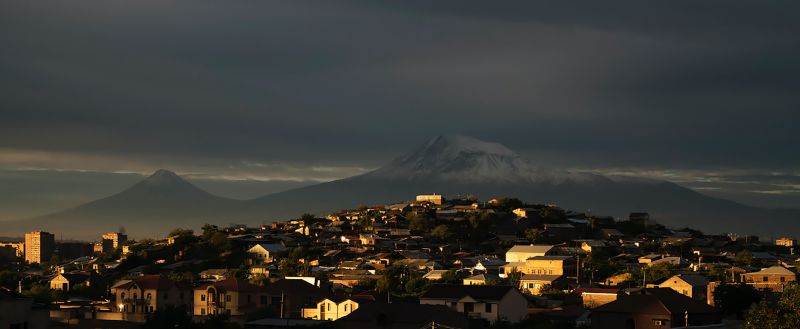
Looking out from my hotel room, I can see the magnificent “Yerevan Stairway”. This public building, funded by the Armenian diaspora abroad, has not been completely completed after decades.
Heavily influenced by the former Soviet style, this building is magnificent and highly symbolic. It runs up the hillside of the city and is topped by a viewing platform overlooking the whole of Yerevan. If you ask the locals when the building will be completed, most of them will shake their heads helplessly and tell you, “Let it go. Anyway, it doesn’t affect our use now.”
This is not unreasonable. Due to the shortage of funds, although this huge building complex has not been completely completed, it does not affect the local people’s acceptance and use of it at all. Like a giant performance art installation that spans the times, it stands in this city with a little grey tone, and has evolved into the core of Yerevan’s art block, surrounded by large and small galleries, cafes and cultural events.
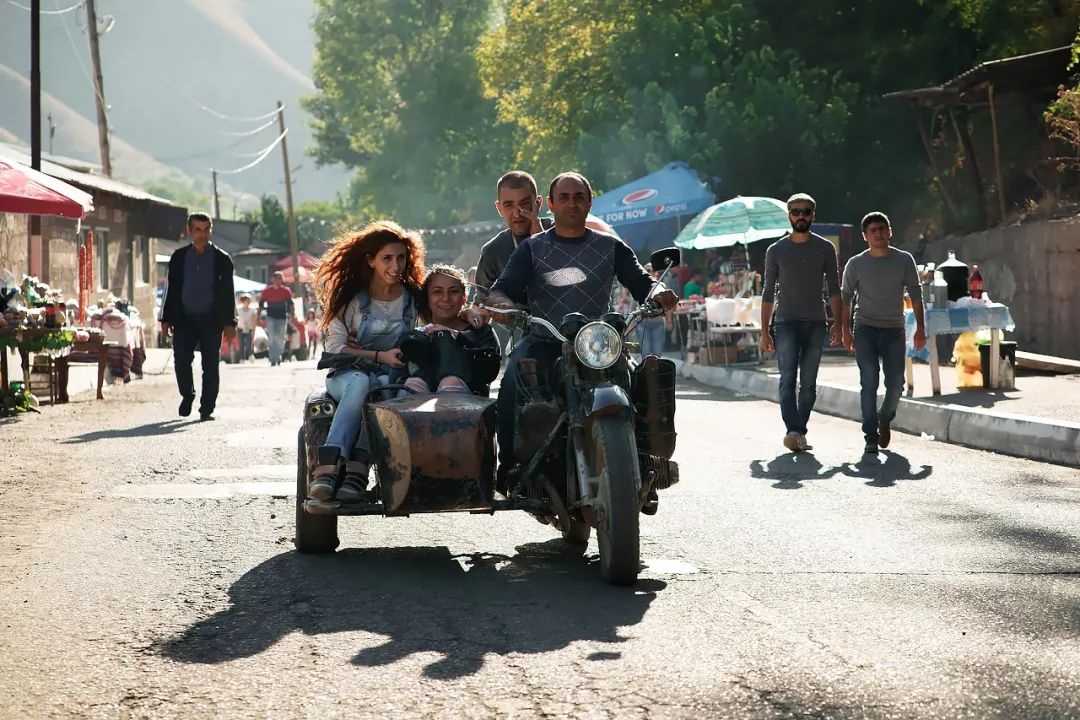
Without the fast-paced urban pressure, people can devote more time to life itself. This may be related to the lagging economy and slow development, but it is not necessarily a bad thing. The weekend market in Yerevan thus gave birth to a unique personality.
You can’t smell the strong commercial atmosphere of some tourist resorts here, nor can you see the attentive faces of vendors who are eager to camp. The commercial flavor is covered by a stronger flavor of life, and it is more like a social activity center for citizens on weekends. There is a dazzling array of goods in the market, and many stall owners are chatting or playing cards leisurely. Since there are not many foreign tourists in Armenia, most of the faces of local people come into view.
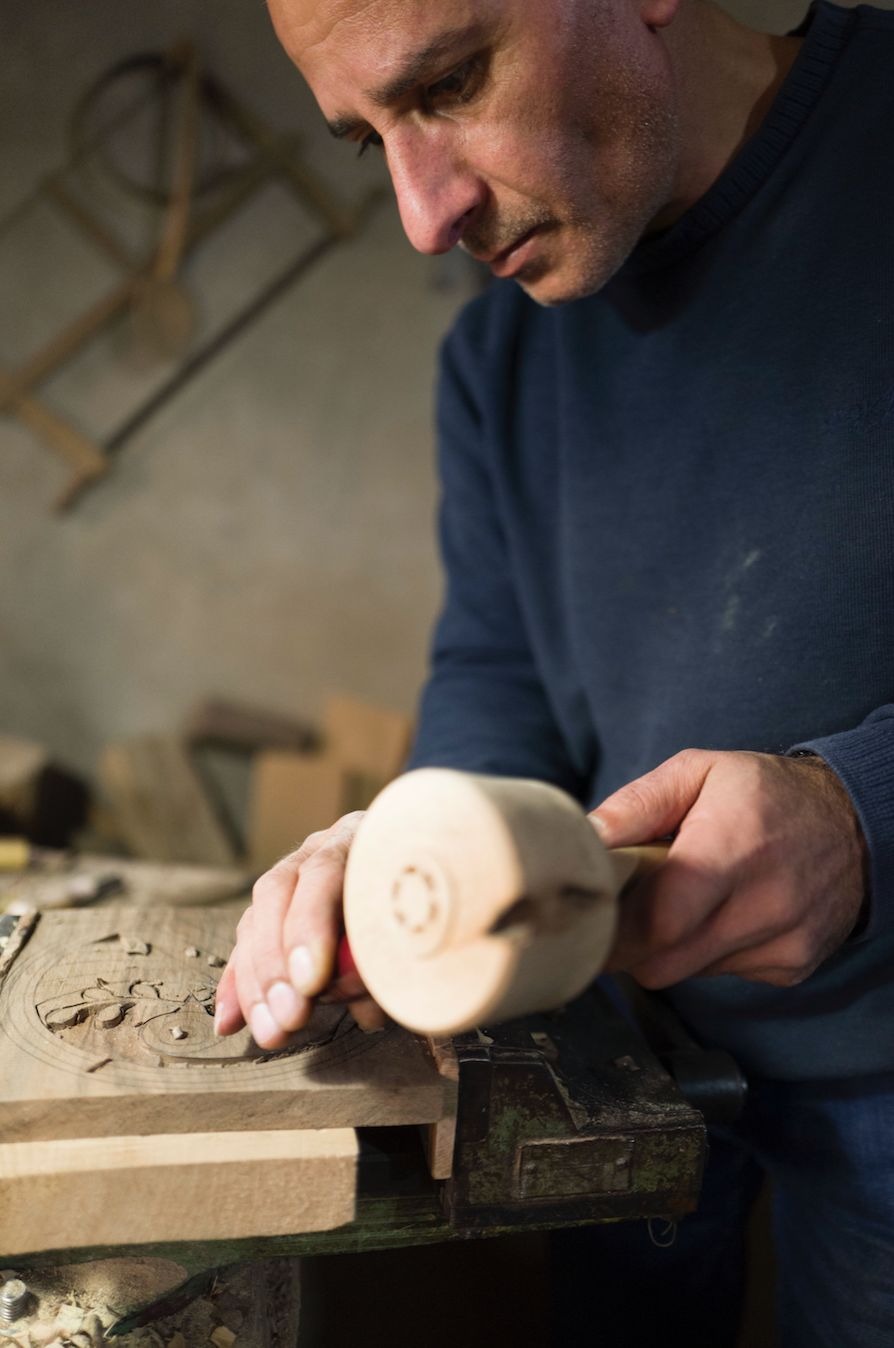
Even though I spent the whole afternoon wandering around the market, I still felt more than enough. The commodities here have distinctive regional characteristics, including pottery, woodcarving, carpets and other local Armenian handicrafts. Those old objects from the former Soviet Union bear a strong historical mark.
At the other end of the market, there is also a considerable painting area, which sells all kinds of local paintings. Even if you have no intention of buying it, it is interesting to just stroll through it and enjoy it.
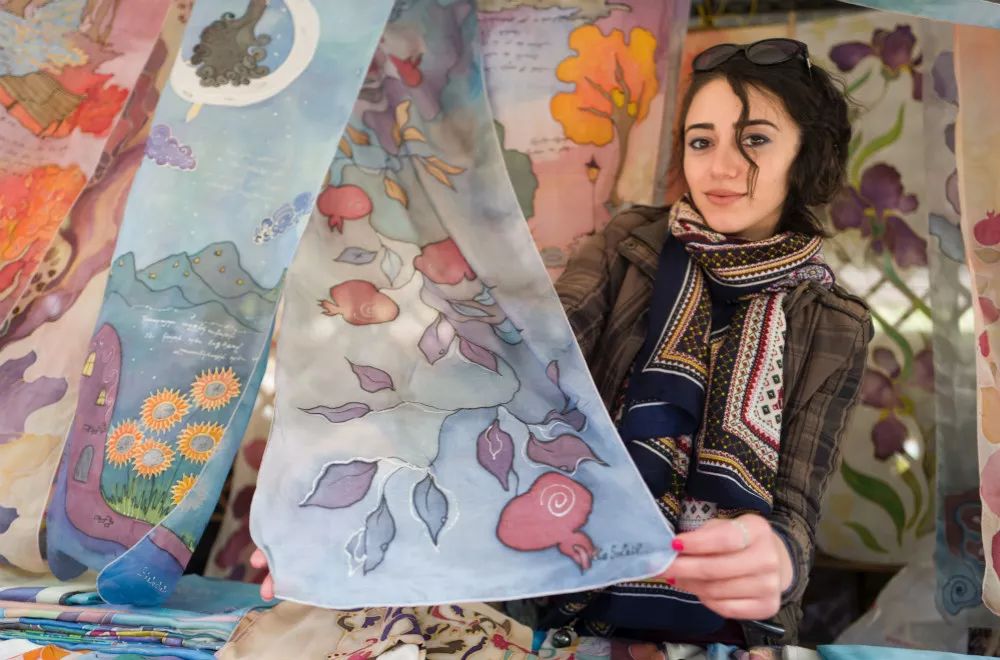
Here, I had the honor to get to know two local artists: one is an old man who is nearly seventy years old and devoted his life to oil painting; The other was a twenty-six-year-old girl painting on a silk scarf. Their works are infiltrated with countless moments of changes and persistence in Armenia for decades.