My husband often tickles my itches. When I get angry, he still looks innocent.
When he scratched for the first time, I curled up into a ball and burst into laughter. So he continued his “surprise attack”. I couldn’t stop laughing and lay on the ground, rolling around and begging for mercy: “Stop scratching!” My husband found it even more interesting and continued to tease me. Finally, in the intervals when I was laughing so hard I could hardly catch my breath, I found an opportunity to lower my face and shout loudly, “Stop it! Stop it!” I’m really feeling bad. Do you know that? Seeing this, the husband defended himself, saying, “But you were clearly smiling happily.”
In fact, this kind of contradictory experience when being tickled is quite common in intimate relationships.

Tickling might make people laugh heartily while feeling very uncomfortable
When we are tickled, it is often not a pleasant experience. This contradiction was already discovered by the ancients. As early as over two thousand years ago, Socrates described tickling as a mixture of pain and pleasure, and in extreme cases, it might even become a form of punishment. For instance, there were relevant records during World War II. In recent years, researchers have shown through experiments that only 32% of the subjects like being tickled, while 34% clearly stated that they do not like being tickled (although these people still laugh when being tickled).
If that’s the case, why do people tend to “laugh happily” instead of “cry sadly” when they are tickled?
In fact, there is something wrong with this issue itself. Who says that laughing definitely means being happy?
Laughter does not equal happiness.
From the perspective of neuroanatomy, the physiological phenomenon of “laughing” is an output of neural signals that control the muscles of the face, throat and respiratory muscles.
The action of “laughing” is generated in this way: The “higher-ups” in the brain (such as the cerebral cortex, limbic system, hypothalamus, etc.) issue instructions, and the “relay stations” in the brainstem (the brainstem nucleus) receive the instructions and direct the “lower-level” nerves to control muscle contractions.
Among them, the facial nerve controls the activities of the facial expression muscles, including squinting and upward curling of the corners of the mouth, etc. The glossopharyngeal nerve and vagus nerve control the muscles in the throat to produce laughter. The phrenic nerve and intercostal nerve innervate the diaphragm and intercostal muscles, generating the rapid and irregular breathing pattern characteristic of “laughter”.
When a set of combined punches is executed, it will show the “smile” in the eyes of others.
Instructions are issued from the “superior” cerebral cortex, pass through the “relay station” facial nerve nucleus to the “subordinate” facial nerve, control the contraction of facial muscles, and make the mouth corners curl up. techno-science
The reason why a “superior” issues the instruction to “laugh” could be for pleasure, sarcasm or embarrassment, or it might just be out of politeness or for posing. No matter what the reason is, as long as the instruction reaches the “subordinate”, the facial nerve, vagus nerve and others just keep their heads down and work hard, making people lift the corners of their mouths and laugh to complete this physiological action.
The act of “laughing” appears in infancy. Even before a baby is a month old, they may smile, and that look can instantly warm the hearts of new parents. However, at this moment, the smile was a physiological reflex, and the instructions were directly issued by the “relay station” without the participation of the “superior”. This kind of smile of a baby often occurs during sleep and is unconscious. It is not a conscious response to external emotions or stimuli.
When the baby is a little older, they will giggle when tickled. This kind of laughter gradually evolves from a simple physiological reflex to a manifestation that can be mixed with complex emotions. As individuals grow up gradually, “laughter” becomes a social behavior, carrying complex social meanings: joy, embarrassment, ridicule…
So, “laughter” and “happiness” are not always equivalent.
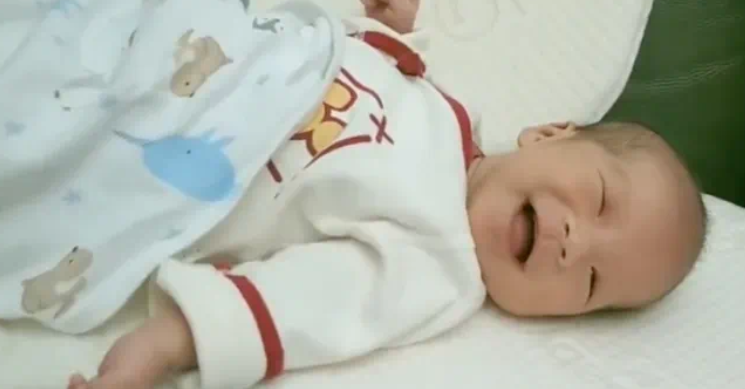
The little baby smiles unconsciously
When being tickled
What reaction did the brain make?
Since laughter does not equal happiness, then what emotion does the smile when scratching an itch represent? This requires starting from the brain’s processing of the tickling signal.
In simple terms, the smile when being tickled is a special kind of complex emotional expression, mixed with various emotions such as pleasure, discomfort, pain and disgust, and cannot be simply summarized as “happy” or “unhappy”.
When being tickled, the tactile signals received by the skin receptors are rapidly transmitted to the brain along the spinal cord, generating the itchy sensation and locating the source of the itch. At the same time, the “emotion processing centers” in the brain (such as the hypothalamus, limbic system, insula, anterior cingulate cortex, etc.) transform simple tactile signals into intense emotional experiences.
Experiments have shown that tickling can activate the midbrain limbic system (similar to an emotional regulatory switch) to release dopamine, causing the body to experience both mild excitement and tension simultaneously, which is not present in ordinary light touches. Functional magnetic resonance imaging shows that when a person is tickled, the activity of the hypothalamus is particularly active, while it is not obvious in autonomous laughter. Other studies have shown that tickling can excite the neurons in the anterior insular lobe and project this to regions related to emotion processing such as the nucleus accumbens, amygdala, substantia nigra, and dorsal thalamus, generating mixed emotions of pleasure, discomfort, or a combination of both.
After the brain integrates the above sensory and emotional signals, it issues instructions through the motor cortex to control muscle activities and produce corresponding manifestations, namely laughing and quickly avoiding. When we are tickled, we often react involuntarily before we even realize what is going on. This subconscious reaction can be regarded as a reflex activity that helps us avoid harm, which is different from voluntary laughter.
Compared with happy laughter, the laughter when being tickled has many differences, including having different acoustic parameters (complexity and pitch), which can evoke a higher level of emotional arousal, and evoke different neural activations and brain connection patterns, etc.
All of the above indicate that the tickled smile is a special kind of existence and is quite different from other types of laughter.
A tickled smile is quite different from other kinds of smiles
The reflex action of scratching an itch
Why laugh instead of cry?
Since all the behaviors when being tickled are automatic responses of sensation, movement and emotion processed by the brain, then in humans (including some animals), why did this response evolve into laughter instead of crying, trembling or other reactions? This might be closely related to social needs.
In infancy, humans will giggle when tickled, which may promote the development of advanced abilities such as social interaction on the basis of their basic instincts of eating, sleeping and crying.
Tickling is a kind of touch-based parent-child game. Laughter is more suitable as its social signal than crying. For babies, crying usually conveys pain or need, while laughing sends a signal of “Come and play with me”, encouraging caregivers to continue gentle interaction. This can help babies build a parent-child bond more quickly.
Conversely, if a baby cries directly when being scratched, it may reduce the opportunities for interaction and be detrimental to their growth. Just imagine, if a little baby cries at the slightest provocation and offers no emotional value at all, who would still be willing to have a child or play with them?
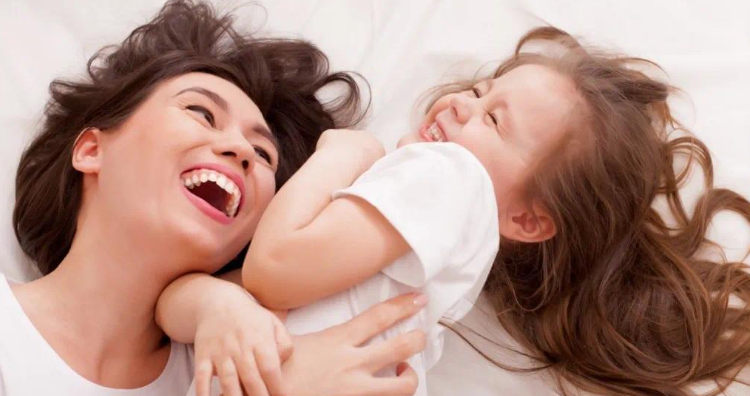
Laughter conveys the signal of “Come and play with me”, encouraging caregivers to continue gentle interaction and helping to build a faster parent-child bond
Of course, if the tickling is too intense or lasts for too long, it can also be annoying. The baby will change from laughing at the beginning to crying, expressing strong dissatisfaction. This is a signal to the adult to stop or reduce the intensity of the tactile stimulation.
In conclusion, the tickling laughter is contradictory: defensive movements and emotional boredom are preventing the tickling from continuing, while laughter encourages the tickling person to keep going. This contradiction is more pronounced among children. The uncontrollable laughter brought about by this controllable “little stimulus” can quickly bring people closer together, relieve stress and create a relaxed and pleasant atmosphere. This is conducive to promoting social interaction, but at the same time, tickling should also be done in moderation to enjoy and maintain the interaction of tickling.
As individuals grow up, they master more social interaction methods, and their dependence on social games like tickling decreases. Therefore, adults are often more “itch-tolerant” than children. However, this social game still serves as a bond to maintain social relationships and thus will not completely disappear.