Close your eyes and imagine you are holding a 40-centimeter-tall vase worth 70,000 US dollars. Please imagine its exquisite painting skills and lustrous glaze while actually making the pose of holding the vase with one hand. Then open your eyes and see if you are using your left hand or your right hand?
Next, close your eyes and imagine holding a two-month-old baby. The baby is looking at you with wide eyes, and you are supporting the baby’s head and body with one hand. Which hand did you use this time?
In reality, most people would choose to hold a vase in their right hand and a baby in their left. Both of these are precious and fragile. Why do people unconsciously hold them with different hands?
Do you always use your right hand to hold everything
Only holding a baby is an exception
Ninety percent of people are right-handed. When holding an object with one hand, it sounds natural to choose the more powerful and flexible right hand.
When it comes to holding a baby, about 69% of people will choose to use their left hand. This preference can be seen in various cultures and historical periods, such as prehistoric statues of mothers and children, tutorials on how to hold a baby nowadays, and postpartum photos of Kate, the Duchess of Cambridge in the UK. Not only that, when holding a doll or imagining holding a baby, most people still choose the left side. Even some studies have observed that chimpanzees and gorillas also prefer to hold their young on the left side.
Picture

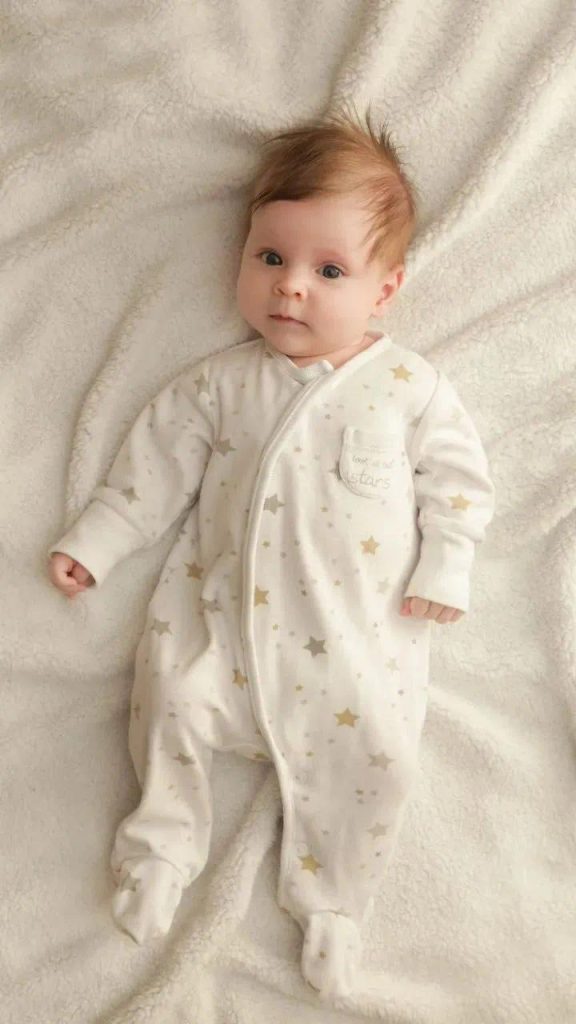
However, it is only when holding infants under 12 weeks old that people’s preference for left-sided holding becomes so obvious. As children grow up and gain weight, many people will switch to holding them with their stronger right hands.
A study had 300 college students repeat a test similar to the one at the beginning of the article. The result is that when imagining holding an expensive vase, 81% of people choose to hold it with their right hand. When imagining holding an old and worthless shoebox, 64% of people still choose the right hand. Only when imagining holding a baby do most people (66%) choose to use their left hand.
Among various combinations of choices, the option of placing the item on the right and the baby on the left is the most common (47.2%), especially among right-handed people and women. The opposite choice, that is, the item on the left and the baby on the right, is very rare (5%).
Most subsequent studies have also reached similar conclusions, proving that “holding a baby in the left hand and an object in the right hand” is a common phenomenon. Apart from considering which hand works better, there must be other reasons that drive people to hold babies on the left side.
Hold the baby on the left
Because the heart is located to the left?
The first attempt to explain the preference of left-held babies was the heartbeat hypothesis proposed by American psychologist Lee Salk in 1960.
Salk believes that most people hold babies on the left side because the human heart is slightly to the left of the chest. When a baby is held on the left side, it is more likely to hear the parents’ heartbeat and thus calm down. This makes it easier for parents to comfort the baby, so they prefer the left side.
However, the sound of the heartbeat is not only heard on the left side. Among the two heart sounds produced by each heartbeat, one is most clearly heard in the left chest, and the other is the loudest in the middle of the chest. In addition, some researchers have found that mothers with reversed congenital organs (the heart on the right) also tend to hold their babies on the left side.
Therefore, the hypothesis about heartbeats cannot fully explain why people like to hold babies on their left.
Picture 2

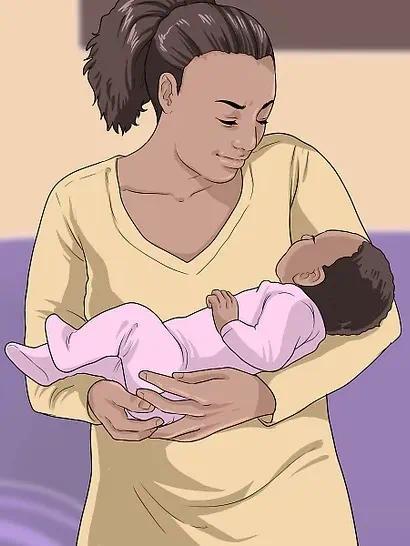

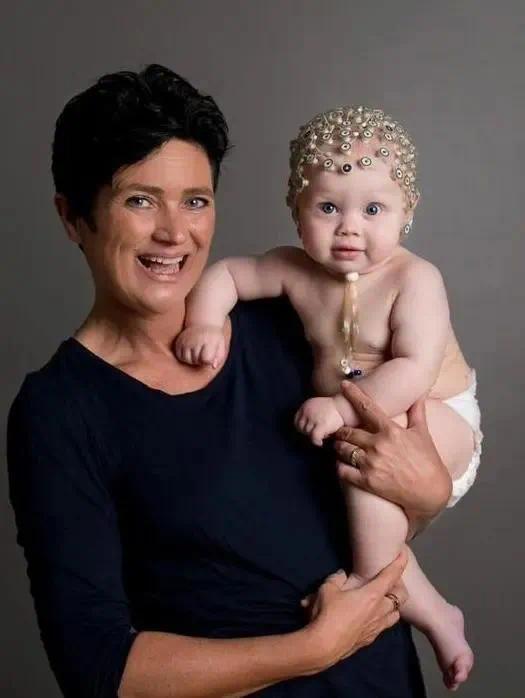
Hold on the left side
Is it easier to notice that a baby is not feeling well?
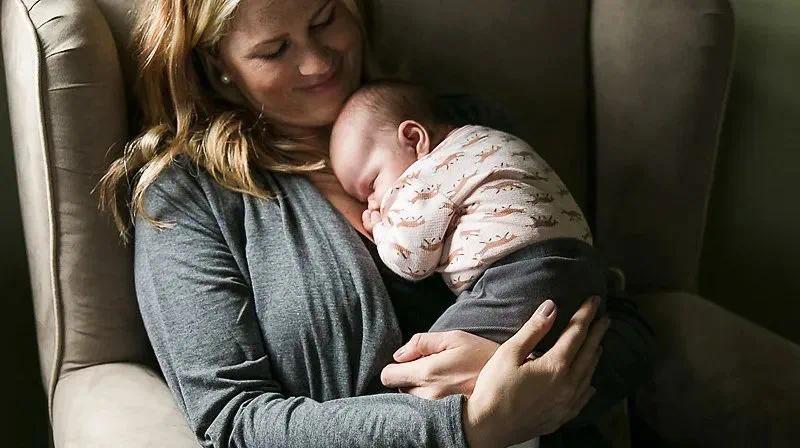
Subsequently, two mainstream hypotheses emerged. One of them is that the right cerebral hemisphere dominates emotional processing. When parents hold the baby on the left side, the information received on the left side of the body is projected onto the right hemisphere, which is more conducive to emotional communication.
Based on this assumption, people subconsciously hold their babies to the left mainly to keep the babies in their left field of vision. Because the optic nerve that transmits visual information crosses left and right, the image in the left field of vision will be projected onto the right cerebral hemisphere. Among the two hemispheres of the brain, the right side has an advantage in emotion processing, especially in recognizing negative emotions, such as the faces of angry, scared, sad or crying babies.
Therefore, when holding a baby on the left, parents can notice the child’s discomfort with relatively little effort.
Picture 3
The blue on the left side of the field of vision is reflected on the inner side of the left eye and the outer side of the right eye. As the information received by the outer sides of both eyes directly enters the ipsilateral brain, the crossed inner sides of both eyes then enter the contralateral brain, and the blue information on the left side is transmitted to the right hemisphere
In the study comparing the two sides of the field of vision, when the subjects recognized the emotions of infant faces, the accuracy of their judgment when the images appeared in the left field of vision was higher than that in the right field of vision, especially among right-people, further supporting the above hypothesis.
Moreover, most studies support that the left side of a person’s face is usually more expressive than the right side, and the emotions it conveys are more easily recognized accurately by others. When a baby is held on the left side, parents are more likely to see the left side of the baby’s face, and the baby also sees the left side of the parents’ face more often. This is also beneficial for parents to recognize their children’s emotions and may help children develop the ability to recognize facial emotions.
In addition to visual information, there may also be differences when auditory signals are input from the left and right sides. Some studies show that the left ear has a stronger ability to distinguish emotions in speech. This might be because after sound enters the left ear, the information is mainly transmitted to the right cerebral hemisphere for processing, and this side also has an advantage in the emotion processing of sound.
One of the most popular hypotheses at present is to explain left-holding preference by the dominance of the right hemisphere in emotion processing, but it has also been questioned by some studies and no definite and consistent detailed conclusion has been reached yet.
Holding the baby on the left side may help with emotional communication
Hold with the left hand
Perhaps it was just to free up a better right hand
The third hypothesis is the most straightforward. It puts forward the preference for left-hugging simply because 90% of people are right-handed, and left-hugging allows the flexible and powerful right hand to be freed up for other tasks. After all, taking care of a child is not just about holding them and calling it a day. At the same time, you also need to feed and look after the baby, as well as feed them until they are full and take good care of yourself.
James E. Huheey was the first to explain the preference for holding babies from the perspective of the dominant hand in 1977. A recent study analyzed the baby holding preferences of nearly 15,000 people. The results showed that 74% of right-handed people prefer to hold their babies on the left side, while only 61% of left-handers prefer to hold them on the left.
Another study set up a more complex task, requiring the subjects to put a pacifier in the mouth of a doll while holding it. According to their usual hand usage habits, 765 subjects were divided into right-handed, biapod (both hands can be used flexibly), and left-handed. The proportions of people holding the doll on their left arm in these three groups were 79.1%, 66.1%, and 39.3% respectively. That is to say, the more a person is accustomed to using their right hand in daily life, the more likely they are to use their left hand when holding a doll. Researchers believe that this result indicates that the dominant hand is the main determinant of the preference for holding a baby.
Looking at the above data, some people might ask, if they choose to hold the doll with their non-dominant hand, why do nearly 80% of right-handers hold it with their left hand and only about 60% of left-handers choose their right hand? Researchers believe that this might be due to environmental influences. Most public facilities, equipment and tools are designed for right-handed people, such as keyboards, Musical Instruments and cameras, etc. Therefore, left-handers are forced to learn to use their right hands more flexibly.
In addition, the phenomenon that women prefer to hold babies on their left side more than men can also be partially explained by the theory of dominant hand, as there are more left-handers in men than in women. In addition, men usually play with dolls less and have less experience holding babies, which might also be part of the reason.
So, the question arises: When people hold a “furry child” with one hand, will they use the hand that holds the child or the hand that holds the object? A very preliminary small-scale study analyzed photos of people holding dogs and found that most women held their dogs on the left side, while men did not show any bias.
The next time you pick up something with one hand, you might as well pay attention to which hand you subconsciously use and what you are holding. Perhaps interesting new scientific knowledge lies in your thoughtless actions.
Preliminary research shows that women prefer to hold dogs on their left side, while men do not show any preference.