If the temperature difference between day and night is as big as a roller coaster, when people in short sleeves and those in cotton-padded jackets pass by each other on the street, they all silently tease each other in their hearts for being “cold-resistant/afraid of the cold”.
But you don’t know that in this unpredictable weather, the ones who suffer the most are not our choices of clothing, but our “little hearts”.
Autumn and winter are seasons when “blood clots when exposed to cold”, especially for those with hypertension, hyperlipidemia or coronary heart disease. Their hearts are like being tested in an “ice cellar”, and a moment’s inattention can easily lead to problems.
But there’s no need to panic. One can get a rough idea of whether their heart is in good condition just by looking at their face.
The face is the “barometer” of the five internal organs. The heart’s distress signals are often first written on the face.
—The First—
Four “Warning signs” Appear on the face
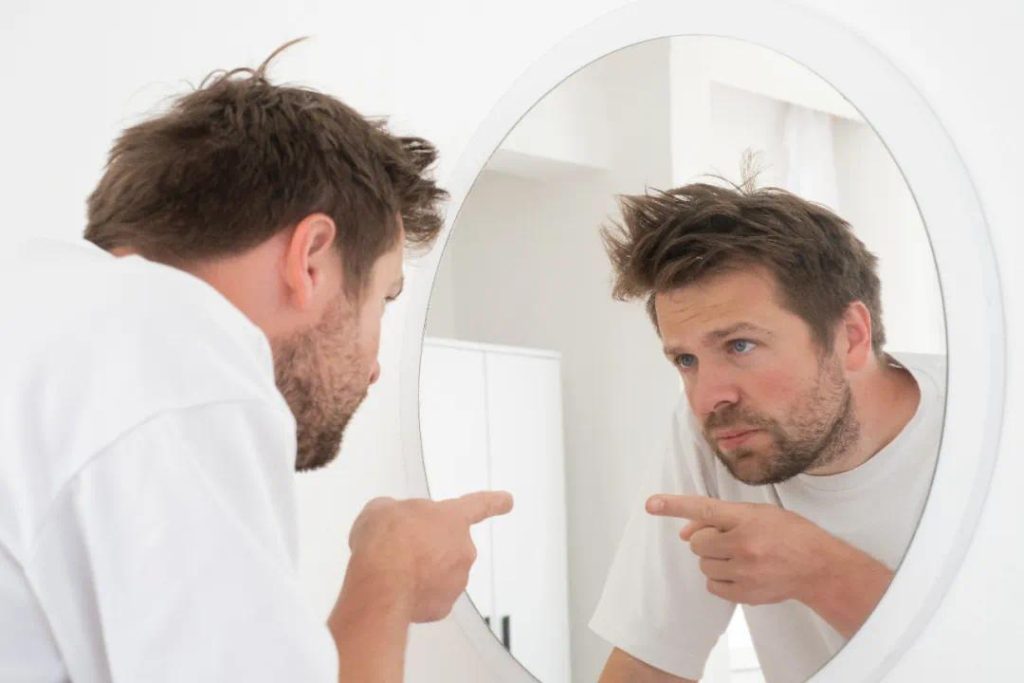
The heart governs the blood vessels. The blood vessels in the face are the richest and most superficial. Therefore, whether the qi and blood in the heart flow smoothly can be seen at a glance.
If these four changes suddenly appear on your face, don’t take it lightly. It’s your heart crying for help!
1
Thick neck
Some friends have thick necks and look quite strong, but in fact, their hearts are already extremely fragile.
People with thick necks usually have poor blood circulation, and their blood pressure, blood lipid and blood sugar levels often exceed the standard. These are all the “number one accomplices” of heart diseases.
Here is a clear criterion for everyone: If a man’s neck circumference exceeds 39 centimeters and a woman’s exceeds 35 centimeters, it is considered a “thick neck”.
A thick neck is essentially due to the accumulation of fat in the neck. This fat can compress blood vessels, increasing the resistance for blood to flow back to the heart. Over time, the heart has to “work overtime” to pump blood, and it’s no wonder it gets tired.
2
The face is swollen
It’s normal for your face to swell the next day if you drink too much water or eat too much salt before going to bed. Adjusting your diet can help relieve the swelling.
However, if the facial swelling is of unknown cause and a dent appears when pressed with a finger that doesn’t come back for a long time, then one should be on high alert.
The heart governs the metabolism of body fluids. The heart is like the “water pump” of the body. If the water pump malfunctions and the body fluids cannot be discharged, they will accumulate in the body. The face is the part that is most likely to be exposed.
This kind of swelling is usually symmetrical. The eyelids are most obvious when you wake up in the morning, and it gradually spreads to the cheeks and chin. It may also be accompanied by symptoms such as chest tightness, shortness of breath, and wheezing when walking. At this time, it is necessary to go for a check-up in time.
3
There is a “small yellow tumor” on the eyelid
If middle-aged and elderly people notice small yellow lumps the size of soybeans around their eyes, which feel soft, they should not mistake them for age spots or milia.
This kind of small xanthoma is actually formed by the accumulation of subcutaneous fat, indicating that the blood lipid level in the body has become so high that it “overflows”.
High blood lipid levels can lead to blood stasis and qi stagnation, just like the blood vessels are filled with “garbage”. Over time, it will clog the blood vessels and cause coronary heart disease and myocardial infarction. Especially for friends with a family history of cardiovascular disease, when such a situation occurs, it is essential to have a blood lipid test as soon as possible.
4
There is a deep groove on the earlobe
A healthy earlobe should be smooth and round. If there is a distinct “horizontal line” on your earlobe, as if it had been scratched by someone’s finger, this is medically known as a “coronary heart disease groove”, which is a signal of insufficient blood supply to the heart.
The earlobe is like the riverbed of a small stream. When the heart is well-supplied with blood, the “stream” flows smoothly and the riverbed is smooth. When the blood supply to the heart is insufficient, the “stream” decreases, and the “riverbed” will become uneven and wrinkled due to lack of nourishment.
Of course, this is not absolute. Some people are born with lines on their earlobes, but if they gradually develop over time and you also have underlying conditions such as high blood pressure or diabetes, you must take it seriously. This might be a sign that your heart is reminding you to “replenish blood and qi”.
—The Second—
Strengthen your mind and keep the “Three-character Formula” in mind
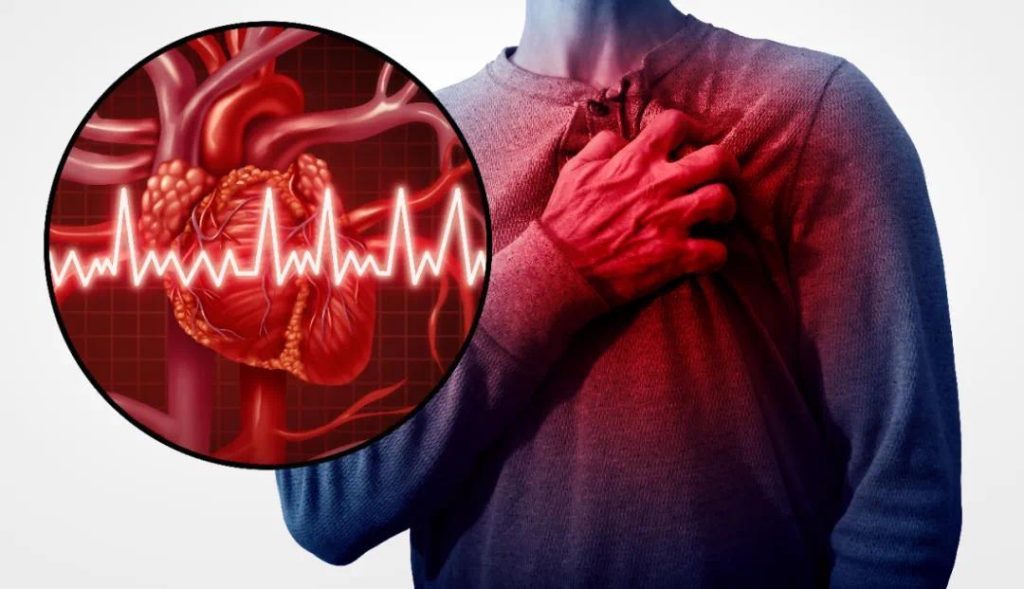
Even if the above signals do not appear, it is still very necessary to take care of the heart in daily life.
Today, I’m going to share with you a “Three-character formula for Strengthening the Heart” – kneading, pressing, and scraping. These are all “heart-protecting switches” that the human body comes with. You don’t need to spend any money. Just spend 10 minutes doing them before going to bed, and it can “recharge” your heart. It’s even more effective than taking health supplements.
Knead the Zhongfu point: Activate the “Human Heart-saving Pill”
I wonder if you have noticed that when doctors perform cardiopulmonary resuscitation, the core area they press is the Zhongfu point. In the Ling Shu: The Treatise on Distension, it is stated: “The Zhongfu point is the official that ministers command and the palace that the heart governs.” This means that the Zhongfu point is like the “chief steward” protecting the heart, capable of resisting pathogenic factors for the heart and regulating qi and blood. It can be called a “heart-saving pill inherent in the human body.”
This acupoint is located on the midline of the chest, at the midpoint of the line connecting the two nipples. If you feel soreness when pressing, it indicates that the blood and qi in your heart may not be flowing smoothly. You should persist in massaging.
Sitting down is the easiest way to press. Use your thumb to gently massage in a clockwise direction for 50 times each time. The force doesn’t need to be too strong, but it should gradually penetrate. The speed of kneading should not be too fast. The more painful it is, the more serious the stasis of qi and blood is. If you persist for a period of time, the soreness will be relieved and the heart will be more vigorous.
Pressing Neiguan and Hegu twice can provide emergency treatment for sudden heart attacks
If you encounter a sudden heart attack and have no first aid tools at hand, these two acupoints can help you “buy time”. Vice President Zhou Jia of Shuguang Hospital Affiliated to Shanghai University of Traditional Chinese Medicine once used these two acupoints on a plane to save a female student whose heart rate exceeded 150 beats per minute, which can be called a “life-saving combination”.
The Neiguan acupoint is located on the inner side of the wrist, in the central depression three fingers wide from the transverse crease of the wrist. It belongs to the Hand Jueyin Pericardium Meridian and can regulate qi circulation, remove blood stasis and relieve pain. It is a “miracle drug” for treating cardiovascular emergencies. The Hegu point is the “tiger’s mouth”, located at the highest point of the muscle when the thumb and index finger are brought together. It is known as the “universal emergency point”, capable of calming the mind, relieving pain, and promoting blood circulation. When combined with the Neiguan point, its emergency effect is doubled.
Press the Neiguan and Hegu acupoints firmly with your thumb. Press each acupoint for 3 to 5 minutes. The force should be such that a sensation of soreness and distension spreads to the arm.
You can also press it more often in your spare time. It can not only prevent heart problems but also relieve fatigue and improve insomnia.
The third scraping of the Pericardium meridian: eliminates blood stasis and toxins, and boosts heart qi
The Pericardium meridian governs the blood vessels. This meridian extends from the palm all the way to the inner side of the arm and serves as a “protective barrier” for the heart. If the heart qi is insufficient or there is blood stasis in the body, scraping the pericardium meridian can promote blood circulation, expel the “waste blood” in the body, and make the heart’s qi and blood flow smoothly, full of vitality.
The operation method is very simple and can be done at home. Remember to prepare a bottle of gua sha oil or moisturizing hand cream to avoid scratching the skin.
- Start scraping from the Laogong point on the palm of your hand. The Laogong point is the starting point of the Pericardium Meridian. Gently scrape it with a gua sha board for 30 seconds to awaken the qi and blood of the Pericardium Meridian.
- Next, scrape the Daling acupoint on the wrist. This acupoint can relieve palpitations and chest tightness. When scraping, be gentle to avoid damaging the blood vessels in the wrist.
- Along the midline of the inner side of the arm, scrape from the wrist upwards to the Quze point at the elbow. Do it in one direction and do not scrape back and forth. Only by following the direction of blood circulation can it be effective.
- Quze point is a converging point of the Pericardium Meridian. Focus on scraping it for 3 to 5 minutes. People with severe congestion may experience petechiae, which is a normal reaction for removing blood stasis.
For the first gua sha, there is no need to aim for the appearance of sha. The force should be just enough to make the skin slightly warm. Scraping each area for 3 to 5 minutes is sufficient. After scraping, do not touch cold water. Drink a cup of warm water to replenish water and help the body metabolize waste.
If the “warning signs” mentioned above have already appeared on your face, or if you often feel chest tightness, palpitations or chest pain, you should go to the hospital for a formal examination in time. Don’t expect to cure the disease just by massage or gua sha.