Experience the earthly beauty of Turkey in the swirling dance steps.
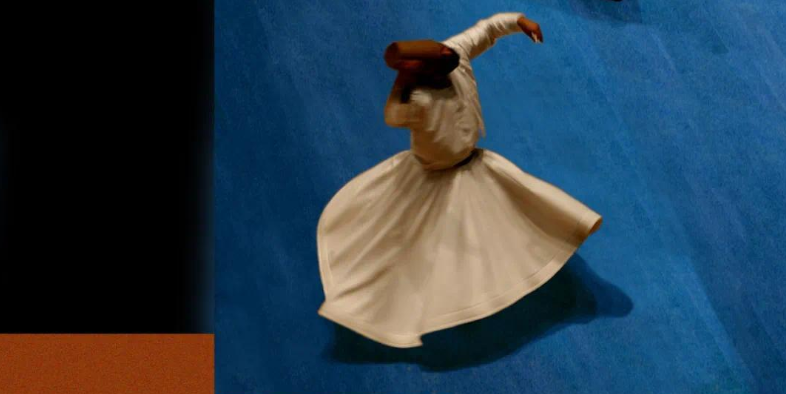
In the eyes of the West, it symbolizes the mystery and allure of the East. In the memory of the East, it was once a distant echo of an expedition. Turkey – a land once illuminated by the glory of the empire and also Mired in the flames of war. Prosperity and decline alternate here, and barbarism and civilization give rise to each other. The miniature paintings conceal the splendor of the past, and the whirling dance spins out the spiritual thoughts of Sufism. On the earth, a nation is reborn time and again for glory.
In 2022, the United Nations officially passed a resolution to change the English name of Turkey to “Republic of Turkiye”. This is not merely a revision of the alphabet, but a reshaping of identity, a step to re-establish oneself in the global dialogue. The spirit behind this name change precisely reflects the thread of this trip to Turkey: to trace the imperial afterglow of Istanbul, to catch a glimpse of the cradle of Sufi mysticism in Konya, and to explore the folk wisdom land of Akshirahir. Every step on this journey is a response to how Turkey weaves its self-identity through history, beliefs and legends.
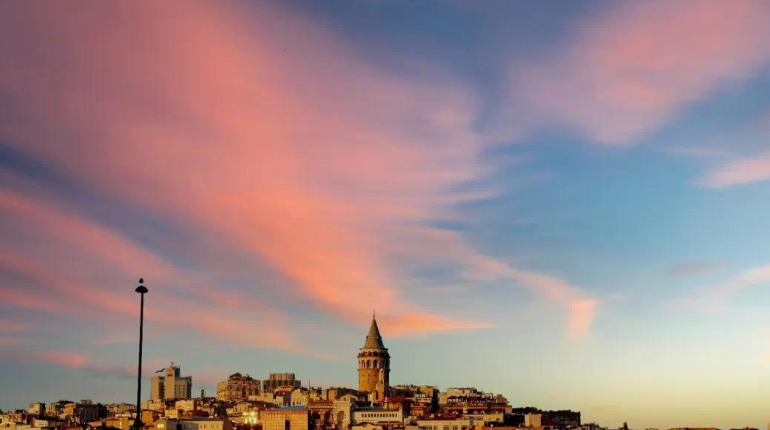
At 5 a.m., the city’s outline gradually became clear outside the airplane window, like an old blanket gently lifted by the morning light. The mist of the Bosporus Strait and the towering minaret of the mosque interweave into a silhouette unique to Istanbul.
This city has never lacked praise. The French poet Alphonse de la Martins wrote: “If a person can only look at the world once, that glance should be towards Istanbul.” Napoleon once said, “If the world were a country, Istanbul would surely be its capital.” Behind these complimentary remarks lies the overlapping of Istanbul’s civilizations spanning three thousand years.
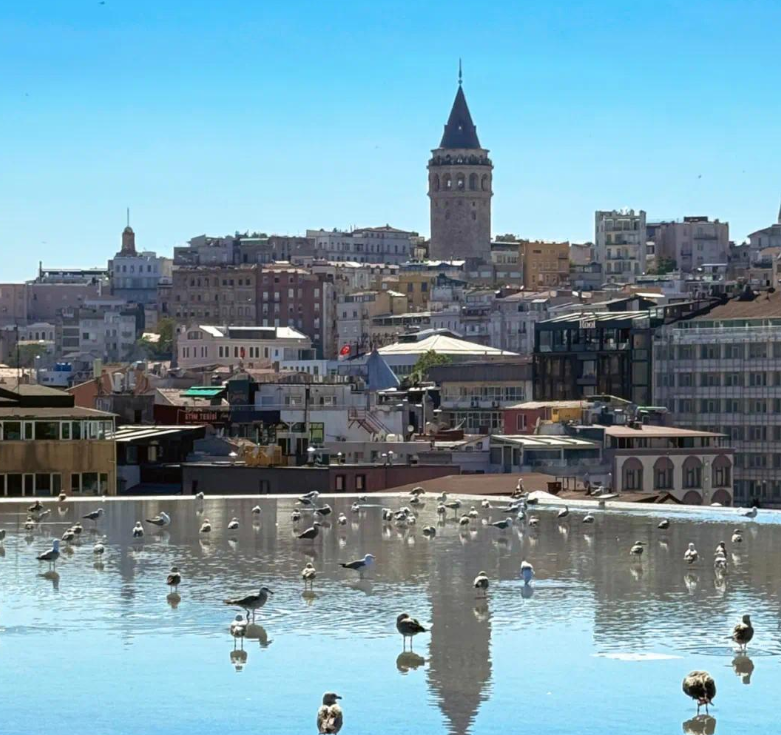
Looking out at Galata, the city and the bay interweave.
The ancient and modern Istanbul meet here
In 658 BC, Greek immigrants established the Byzantine City on a promontory between the Golden Horn and the Sea of Marmara. In 330 AD, the Roman Emperor Constantine the Great moved the capital here, renamed it “Constantinople”, and took advantage of the natural barrier of the strait to build the famous Theodosius Wall, turning this place into the new heart of the Eastern Roman Empire. In 1453, Sultan Mehmed II of the Ottoman Empire bombarded the walls of Theodosius with heavy artillery. The last emperor, Constantine XI, died in battle. The cross on the dome of Hagia Sophia was replaced by a crescent moon. The Eastern Roman Empire came to an end and completed the rewriting of its cultural map – “Constantinople” was replaced by “Istanbul” and became the new capital of the Ottoman Empire.
For three thousand years, Istanbul has witnessed the rise and fall of the Roman, Byzantine and Ottoman empires. Until the establishment of the Republic of Turkey in 1923, it has always been a stage where Eastern and Western civilizations converge. The best way to explore Istanbul is by taking a ferry. Sailing through the Bosphorus Strait, you can easily complete your journey from Europe to Asia. You can clearly see this city as a thick European history book, gradually unfolding its legend to you. On the right side of the ship’s side, the dome of the Hagia Sophia emits golden light in the setting sun, and on the left is the faint silhouette of the Suleymaniye Mosque. The two great buildings gaze at each other across the sea, like two imperial watchmen who refuse to retreat. Even the Nobel Prize winner in Literature and Turkish writer Orhan Pamuk said in his book: “Wandering in such a great, historic, lonely and desolate city as Istanbul, yet feeling the freedom of the sea, this is the exciting part of a trip along the Bosphorus coast.” The powerful ocean current pushes the tourists forward. In the refreshing sea air, there is not a trace of the dust and noise of the city on the shore. Tourists begin to feel that this is still a place to enjoy solitude and seek freedom after all.
The deep blue sea water sets off the red-roofed wooden houses, which can always be seen on the Bosphorus Strait
A few kayaks represent the unique leisure and vitality of Istanbul
Wandering through the winding and ancient streets and alleys, touching the rough city walls of ancient Rome, entering the grand Bazaar and the spice market, kneeling down with the locals under the call to prayer, and feeling the piety of faith. When you step into the Grand Mosque of Aya-Sophia, you will be deeply shocked by the soul: the grand hall, the high dome, the huge nave, the low-hanging circular lamps and the numerous precious mosaics all emit a brilliant glow. What you see is just like what Mehmed II felt when he strode into this place in 1453 with the air of a victor. After a thousand years, it remains one of the largest religious buildings in the world. Its shape, structure and scale have set the standard for all Byzantine-style Christian churches in later generations.
Entering the Grand Bazaar is like falling into a feast for the senses. More than 4,000 shops are lined up along the maze-like corridor, with amber lamps, indigo glazed porcelain and red carpets piled up above and at the feet, creating a sense of rule in the chaos. The spice stand is the most irresistible – small mounds of red pepper powder, saffron threads, chickpea powder… The air was filled with a complex aroma of cumin, cinnamon and rose, as if the Ottoman caravan had just unloaded its cargo boxes here.
Istanbul is never short of coffee shops. You must try Turkish coffee, which is known as the “pioneer” of European coffee and has a history dating back to the 16th century. The traditional method is to bury the earthenware pot in hot sand and simmer it over low heat to extract the oil and aroma. A skilled shop assistant will smoothly pour the coffee into a small cup three times right in front of you. Take a sip of the rich coffee with the aroma of nutmeg and use the coffee grounds left at the bottom of the cup to predict one’s fate. The clerk, who had transformed into a fortune teller, glanced at the coffee grounds at the bottom of the cup that looked like a cat’s profile and said, “Oh, this is a good omen.”

The sea breeze caresses the face of Jinjiao Bay, and citizens often come here for a walk and rest
For the people of Istanbul, who live in the “City of Cats”, cats are part of the soul of Istanbul. All kinds of cats walk along the sidewalks as if no one else is around, appearing on the counters of coffee shops, benches by the roadside, antique shops, restaurants, clothing stores… People are always held back by these cute little things and forget the destination of this trip.
Only those who have truly stepped into Istanbul can understand the value of Pamuk’s words: “The fate of Istanbul is my fate. I am attached to this city because it has shaped who I am today.” Today, Istanbul is still growing: ancient fishing villages have become fashionable districts, and the suburbs have developed into new city centers. Modern art galleries, cultural centers, and streets where artists and designers gather have become new “pilgrimage sites” for young people. The intersection of Eastern and Western cultures has made Istanbul inclusive and rich. It has brought Turkey, which stands at the crossroads of the world, to the forefront of the entire world.
The details of the century-old residence tell the story of history.
At the corner lies the daily life and romance of Istanbul
These places are also worth visiting
The Historical Peninsula: This is the core stage of the thousand-year-old civilizations of the Eastern Roman and Ottoman Empires. It gathers epic buildings such as the Grand Mosque of Aya Sophia, Topkapi Palace and Sulaimaniye Mosque, like a museum of architecture without walls.
Karakoy: Since the Roman era, it has been an important commercial port, leaving behind architectural legacies such as the Camondo Steps, the Bank Street and the ancient caravan post. Today, this place has become a perfect microcosm of the dialogue between the old and the new in Istanbul.
Galata Tower: Welcome to the “Sky Center” of Istanbul. This stone tower, which was first built in the 6th century, combines the architectural styles of the Genoa ground floor and the Ottoman superstructure. Reaching the top of this stone tower towering into the sky offers a 360-degree view of the entire city of Istanbul.
The Basilica Cistern: As the largest and most mysterious underground reservoir in Istanbul, the Basilica Cistern is supported by 336 Roman stone columns. The two Medusa stone column bases themselves are filled with countless legends. The mysterious atmosphere here has even attracted movies such as “007” to shoot scenes here.
Konya, silently located in the heart of Anatolia on the map, was once a fork in the Silk Road, known as Iconium by the Romans, the capital of the Seljuks, and the place where Lumi wrote, “You were born with wings, why do you crawl forward?” Its story is far older than one might imagine.
The quiet streets and alleys carry the daily life and history of this city
Not far from Konya lies Catalhoyuk (also known as the Catalhoyuk Mound), which opens the door to the Neolithic Age and presents the world’s earliest city prototype over 9,000 years ago before your eyes: houses are connected layer upon layer, forming a 21-meter-high mound. Residents enter and exit from the rooftops, and there are ancient landscape paintings and mother goddess reliefs on the walls. It is astonishing that there has been no war in this settlement for four thousand years. The pottery seals suggest the budding of the concept of private ownership, and the wisdom and peace of the early human civilization were witnessed here.
Moving forward through time, in the 12th and 13th centuries, Konya, the capital of the Seljuk Kingdom in Anatolia, reached its peak and became a center where art, science and spirituality interwode. Today’s Mevlana Museum is the place where Mevlana Celaleddin i Rumi, the most revered Sufi leader of the 13th century, lived and contemplated with his followers. Under the “Green Dome” covered with turquoise tiles lies Mevra’s final resting place. Manuscripts, Musical Instruments and ritual objects are quietly displayed in the museum, telling the story of centuries of spiritual inheritance.
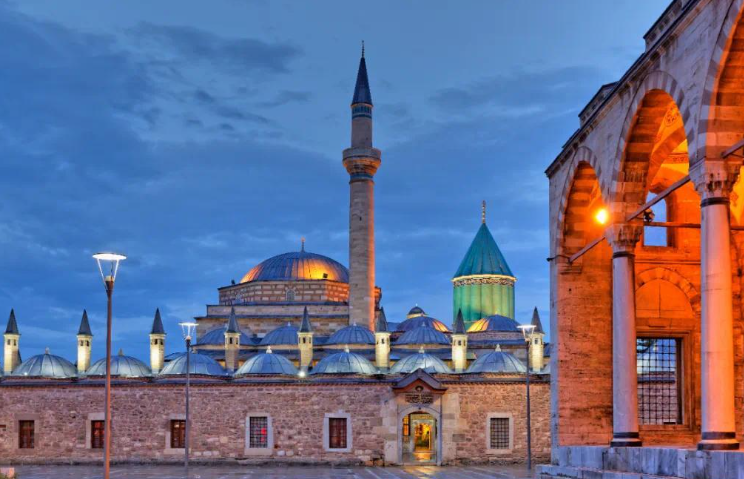
Mevrana Monastery and Rumi Mausoleum
The heart of Sufi culture and also the most sacred spiritual landmark of Konya
What really made Konya known to the world was the philosophical and poetic whirling ritual – Sema, also known as whirling dervishes, a way of dialogue between the body and the spirit. Amid the distant music of the ney, the dancer takes off her black outer robe, spreads her arms and spins with her left foot as the axis, interpreting the operation of the universe, the cycle of life, and the exploration of the inner self through the language of rotation.
Sema – a dialogue between the body and the divine amid music and chanting
To the west of Konya lies Akshshir, a small town famous for the master of humor Nasreddin Hodja. In the days that followed, it revealed to us the essence of the life of the Turks, which was full of wisdom and humor.
On the blue dome of Akshair, there is a statue of Nasreddin Hoga riding a donkey.
Under the sky, it tells of the humor and wisdom of this small town
It is said that Hojia is the prototype of the well-known Afanti story among the people. His image of wearing a scarf and riding a donkey upside down, as well as those humorous stories of great wisdom appearing simple and full of life philosophy, were once spread to Central Asia and China via the Silk Road, making him a messenger across cultures.

This animated film “The Clever Afanti”, produced in 1981,
It is a childhood memory for many people born in the 1980s
The 66th Nasreddy Hoja International Festival has drawn tourists from all over the world to this peaceful small town, but the locals still lead their lives at a leisurely pace. In the alley, we often come across old women sitting at their doorsteps basking in the sun, warmly inviting us to taste the pastries they make by hand. At this moment, simply uttering a Turkish “incantation” – Kuragas – could instantly bring about the other person’s first surprise and then a smile as sweet as honey. This greeting means “May everything be as easy as pie for you.” Perhaps it is precisely this philosophy of life that “everything can be handled with ease” that has nourished Hoja’s humor and wisdom.
The ancient town of Akshehir exudes a quiet and simple atmosphere of life
The celebration kicked off. Surrounded by the crowd, Turkish national treasure actor Altan Erkekli was awakened as Hoja from his “eternal slumber”. He appeared on the street riding a donkey, with a flowing white beard and a sly look in his eyes, as if he had traveled from a distant century. Subsequently, the crowd flocked to the shore of Lake Aksheshir to participate in the most symbolic “yeast throwing” ceremony. The actor threw a spoonful of yeast into the lake, reenacting Hoja’s most famous anecdote – he hoped the yeast would turn the lake water into yogurt, but to the skeptics, he replied, “What if it succeeds?” At that moment, I suddenly understood Hoja’s wisdom: when the world is full of “impossible” remarks, one should always have the innocence and courage of “what if it succeeds” towards life. Leaving the cheerful crowd and entering the Nasreddin Hodja House, looking at the miniature paintings on display in the museum, Hodja is still riding a donkey backward, winking slyfully at the viewers of the paintings, leaving humor and wisdom quietly fermenting here.
Let travelers instantly travel back to the old days of Turkey
When the flight attendant of Turkish Airlines handed me a warm loaf of bread with the aroma of wheat, a mixture of the scent of stone kiln roasting and the original aroma of wheat filled the cabin. This is the “oldest bread” made from the oldest single-grain and double-grain wheat in the Anatolian region. Taste it while it’s still hot. At an altitude of 30,000 feet, the authentic cuisine on the plane first pulls the taste buds into the “time and space portal” of Turkey.
Turkish Airlines has nearly 1,500 routes.
It is the airline that flies to the most countries in the world
Turkish cuisine, rooted in the ancient land of Anatolia, and due to its geographical location and historical accumulation spanning the Eurasian continent, has absorbed the culinary essence of the Middle East, the Mediterranean, the Balkans and Central Asia, yet has always maintained a distinct personal style. As an important stop on the ancient spice route, Istanbul was once the dream destination for spice merchants all over the world – cinnamon, cardamom and saffron from the East met bay leaves and oregano from the Mediterranean coast, and they eventually completed their flavor rebirth in the Turkish kitchen.
Turkish cuisine is one of the world’s three major cuisines

On the streets of Istanbul, food lovers have long begun their pilgrimage. Under the Galata Bridge, in front of the fish bread (Bal Ik-ekmek) stand, freshly baked mackerel is wrapped in soft bread. Turkish kebabs are no ordinary dishes. Besides the well-known Doner, there is also the İskender Kebap, which uses eggplant puree to enhance the aroma of the meat, and the Adana Kebap, which is marinated with spices and then grilled over charcoal. Each one is an ultimate interpretation of heat control and seasoning techniques. In the dessert shop, there are small mountains of Baklava, with layers of puff pastry wrapped in fillings like walnuts and almonds, drizzled with syrup or honey, reaching the peak of sweetness. On par with this is the ubiquitous Turkish Lokum in the market, which is the best “companion” to pair with Turkish coffee. When it comes to Turkish coffee, its production techniques were also inscribed on the UNESCO Intangible Cultural Heritage List in 2017. Nowadays, the Turkish breakfast culture is also applying for World Heritage status – this fully demonstrates Turkey’s position in the global culinary world.
The Golden Horn Bay interweaves with the city skyline to create the daily flavor of Istanbul
Whether it’s the “oldest bread” on Turkish Airlines, the charcoal-grilled meat on the streets, the desserts of Sudan or the creative kitchen of Michelin, for food lovers, Turkey’s thousand-year-old civilization has ultimately transformed into an ever-lasting feast on the tip of the tongue.