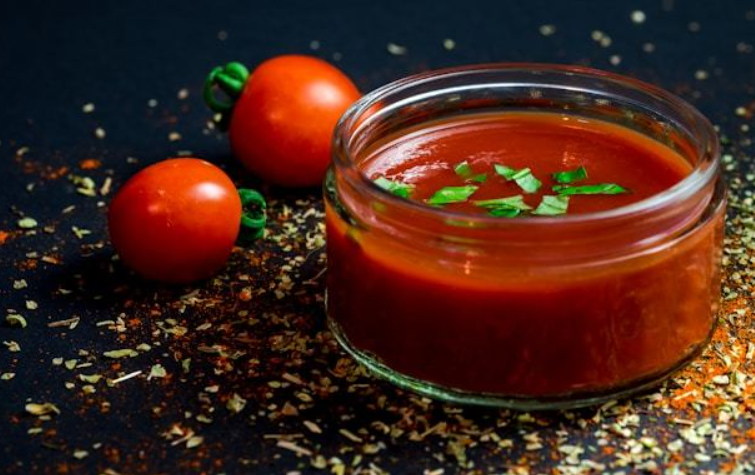
Many people may be worried that the nutrients in tomatoes will be lost during the process of being processed into tomato sauce, so they think that the nutritional value of tomato sauce is not as good as that of fresh tomatoes. What is the truth?
Lycopene showdown
Lycopene is the most significant nutrient in tomatoes. It is a powerful antioxidant and has excellent anti-cancer (such as prostate cancer and lung cancer) and anti-aging effects. Compared with fresh tomatoes, tomato sauce has two major advantages in supplementing lycopene.
The lycopene content in tomato sauce is more than four times that of fresh tomatoes. During the processing, heating destroys the cell walls, releasing more lycopene, and the concentration process significantly increases its content.
Lycopene is fat-soluble. When tomato sauce is cooked, it combines with oil to increase its absorption rate.
However, the amount of lycopene in tomato sauce is closely related to the ingredients. When purchasing tomato sauce, it is best to choose the one that clearly indicates the lycopene content.
Whose nutritional components are more concentrated?
Many people are worried that tomato sauce will lose a lot of nutrients during processing. Next, let’s take a look at the content of several nutrients in tomato sauce.
The vitamin C content in raw tomatoes is 19 milligrams per 100 grams, while tomato sauce is slightly inferior in this regard as it loses some of its vitamin C due to heat during processing. However, it doesn’t mean that all vitamin C has been lost. The acidic environment in tomato sauce helps retain some vitamin C, and the loss is only about 10% to 30%.
The nutritional components of mineral and dietary fiber tomato sauce are more concentrated, with potassium and dietary fiber content being four times and more than twice that of tomatoes respectively. For instance, tomato sauce has a potassium content as high as 989 milligrams per 100 grams, making it suitable for patients with hypertension to assist in regulating their blood pressure.
Other nutrients: Tomato sauce retains most of the B vitamins and carotenoids, such as beta-carotene, but its folic acid content is slightly lower than that of fresh tomatoes.
These groups of people are more suitable for eating tomato sauce
People who need to efficiently supplement lycopene, such as those who need to prevent cancer, cardiovascular diseases, or have the need to enhance their antioxidant capacity.
For people with sensitive stomachs, tomato sauce is more suitable for those with weak stomachs to enhance the flavor when cooking: Tomato sauce has a moderate acidity and is suitable for stewing and stir-frying, enhancing the flavor and promoting the absorption of fat-soluble nutrients.
If the main need is to supplement vitamin C, it is still recommended to eat fresh tomatoes.
Ketchup is not the same as tomato sauce
The sweet and sour taste of tomato sauce is loved by many people, especially children at home. Tomato sauce can be dipped in potatoes, pork ribs, even rice noodles or anything else. However, tomato sauce is not exactly the same as tomato sauce.
Tomato ketchup contains sugar, salt, acidulants, flavor enhancers and thickeners. In comparison, it has higher calories, sugar and sodium. The ingredient list of tomato sauce only includes tomatoes, without any artificial colors or sugar, thus retaining the original flavor of tomatoes and having a very low sodium content. This is why it is recommended that people eat less tomato sauce and choose tomato sauce instead.
Currently, there are already “simplified” tomato sauces on the market that only contain organic sugar and organic vinegar. Compared with organic tomato sauce, this tomato sauce has almost the same sodium content, but 8 grams more carbohydrates per 100 grams. For those who are not used to pure tomato sauce, you can first mix this tomato sauce with tomato sauce and then gradually transition to pure tomato sauce without sugar.
Unlock various ways to enjoy ketchup
When stir-frying, use tomato sauce instead of fresh tomatoes, such as tomato beef brisket, tomato shrimp, tomato soup, tomato cauliflower stir-fry and tomato scrambled eggs.
When having barbecue, using tomato sauce as a dipping sauce can increase the antioxidant components and reduce the impact of carcinogens in the barbecue.
To make desserts, you can mix tomato sauce with yogurt, salad or add it to juice for drinking. You can also drink it by dissolving it in hot water or adding it to various soups. It easily provides potassium, carotene, lycopene and dietary fiber without increasing the intake of sugar and salt.