Perhaps no one can deny that India is a land full of magic. Whenever we talk about it, people always have an indescribable complicated feeling in their hearts. Not long ago, “Mysterious Superstar” starring amir khan was released in the cinema. Yin Xiya, a girl in the film, broke through the shackles of family and society and resolutely went to Mumbai, India to pursue her musical dream. Why choose Mumbai?
As India’s second most populous city and largest seaport, Mumbai not only has extremely luxurious landmarks, but also houses the largest slum in Asia. The “Gate of India” facing Mumbai Bay was built in 1911, which combines the architectural styles of India and Persia. Standing there, you can see the vivid life of this city. Chhatrapati Shivaji Terminal (formerly known as Victoria Railway Station) has been in operation since 1887, and the old tracks, old carriages, old ticket offices and even the old ceiling fans buzzing overhead all seem to have frozen time; Dharavi slum, famous for the movie Slumdog Millionaire, is the first slum in Asia and the second largest in the world. There are schools, mosques, food stalls, markets and residences here, where people from different regions and beliefs live together. The coastal avenue stretching along Baker Bay was built in 1920, like a crescent moon embedded on the coast, attracting tourists from all over the world…
Mumbai is a “city of stars” beyond imagination, with bright Bollywood and countless movie locations, where contrasting lenses often travel through time and space. At the same time, it is also a “city of contradictions” with strong contrast, where luxury and poverty, advancement and backwardness, hope and despair are fiercely intertwined, constantly hitting the heartstrings of travelers, which is unforgettable.
Fantasy-like laundry for thousands of people
After living in Mumbai for a week, I still can’t figure out the exact location of the city center. There are crowds and crowded traffic everywhere. There are often no lanes in the streets. There are no zebra crossings at many intersections. Buses and trains don’t even close their doors or have no doors at all. It seems chaotic but full of vitality.
Fortunately, every taxi driver is like the most active extras in this “large studio”, carrying me through and through to the “shooting scenes”. The driver put me on a flyover near Mahalaxmi railway station and said it had the best view.
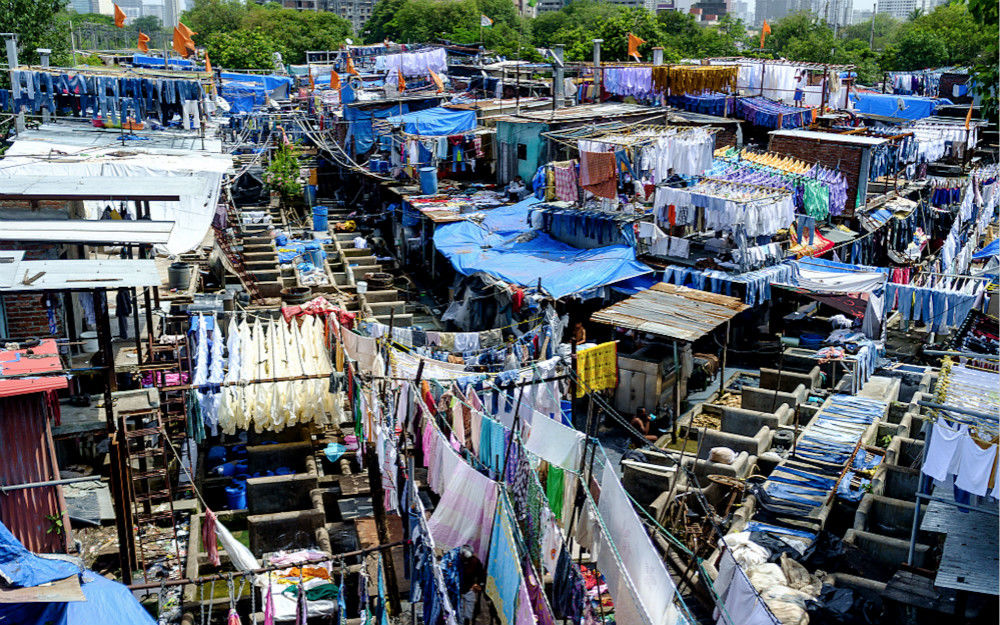
Thousand-person laundry
Sure enough, as soon as he got out of the car, tens of thousands of colorful clothes and sheets appeared in front of him, fluttering in the wind. The sun becomes fragmented through the densely covered clothes, and fantastic lights and shadows ripple in washing sinks of different sizes… This low laundry community has a resounding name-Dhobi Ghat (Laundry for a Thousand People), which mainly provides laundry services for star-rated hotels and wealthy families.
From completely manual operation in the past to semi-mechanization today, Dhobi Ghat has gone through 160 years and is a household name in Mumbai.
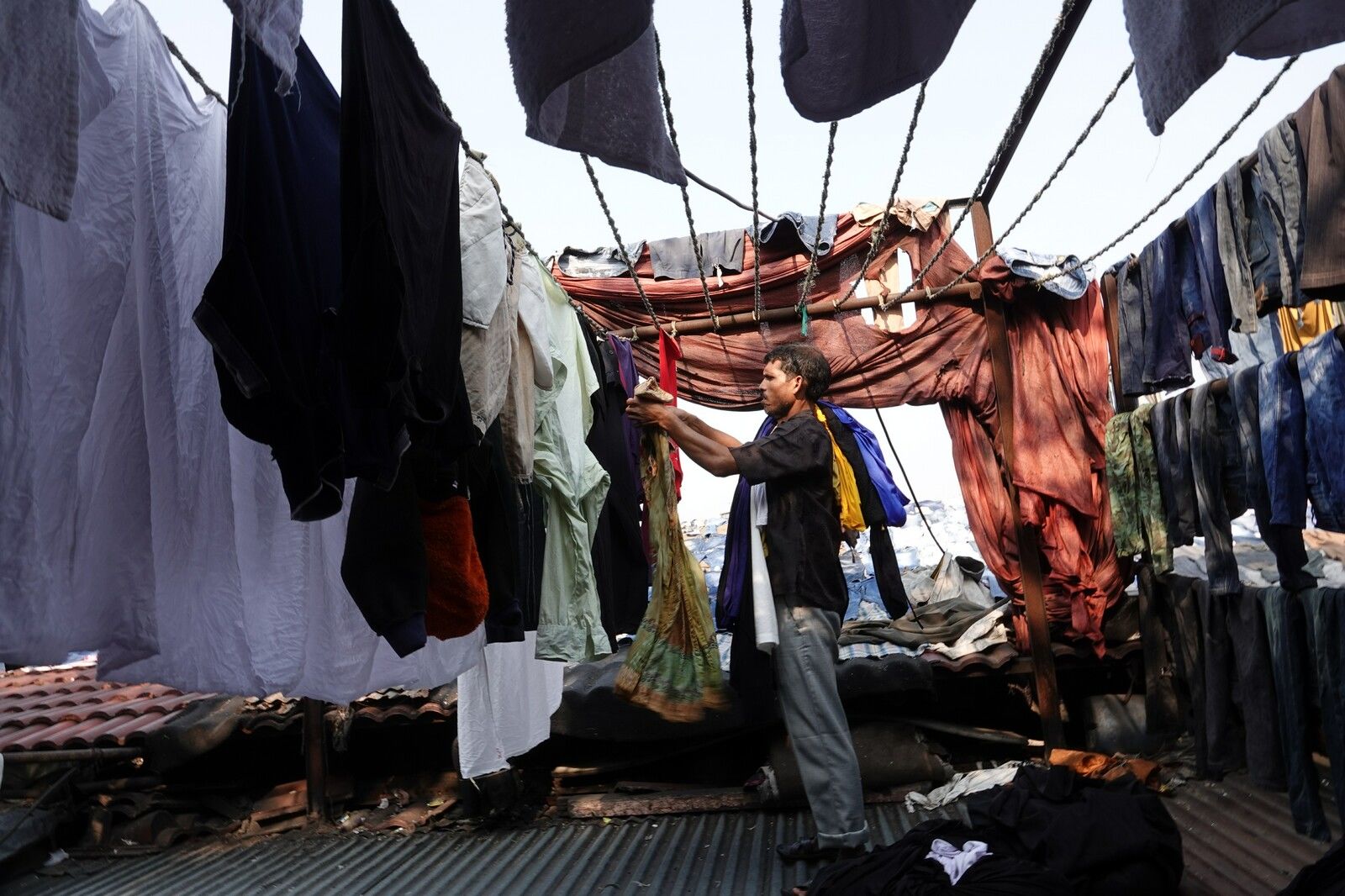
Thousand-person laundry
Entering the laundry to shoot, a laundry man named Gurmit offered to be my guide. Looking at the maze of the field, I nodded in agreement. While greeting acquaintances, he told me about life here.
Gurmit said that the thousand-person laundry was a municipal project in Mumbai 160 years ago. At that time, Mumbai lacked running water, and the rivers dried up in the dry season, and the laundry problem plagued every family and merchant. As a result, this open-air “laundry market” came into being, and the municipal government provided water for it. More than 800 pools can accommodate thousands of people to wash laundry at the same time, thus solving the needs of people’s livelihood.
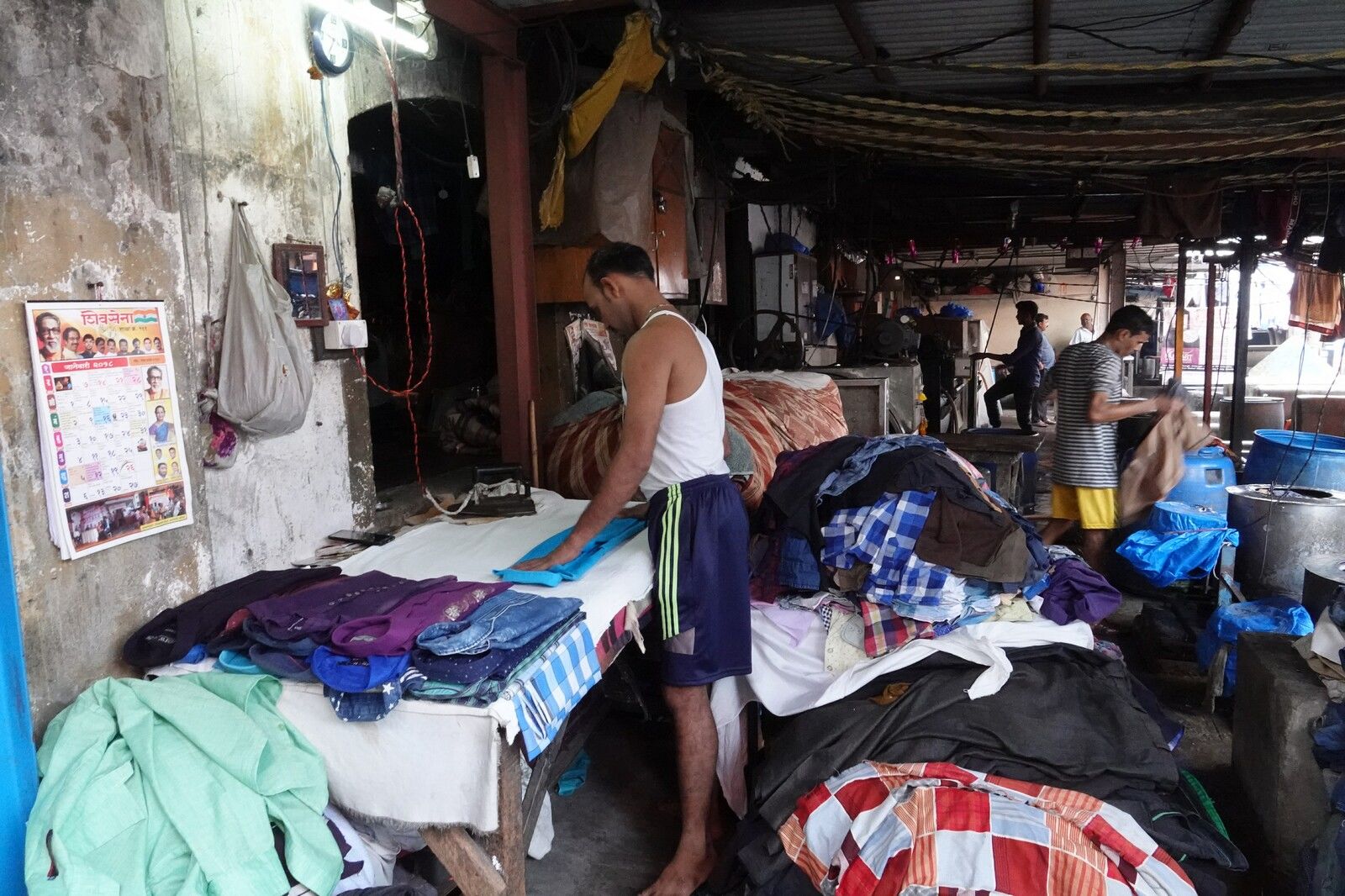
Thousand-person laundry
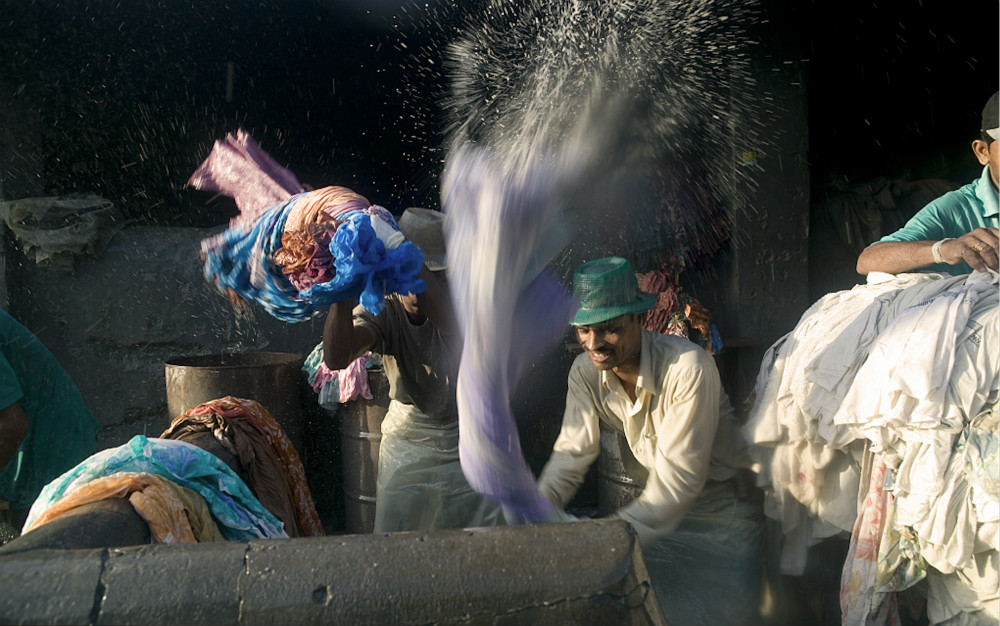
Even in modern times, many buildings have running water, and it is still customary for people to send clothes to Dhobi Ghat for cleaning. Today, there are 826 families living here, and more than 5,000 people are engaged in laundry, drying, ironing and transportation. The workers started busy at 4:30 in the morning and finished work at 11 o’clock in the middle of the night. Usually for 14 hours each person is paid around Rs 300.
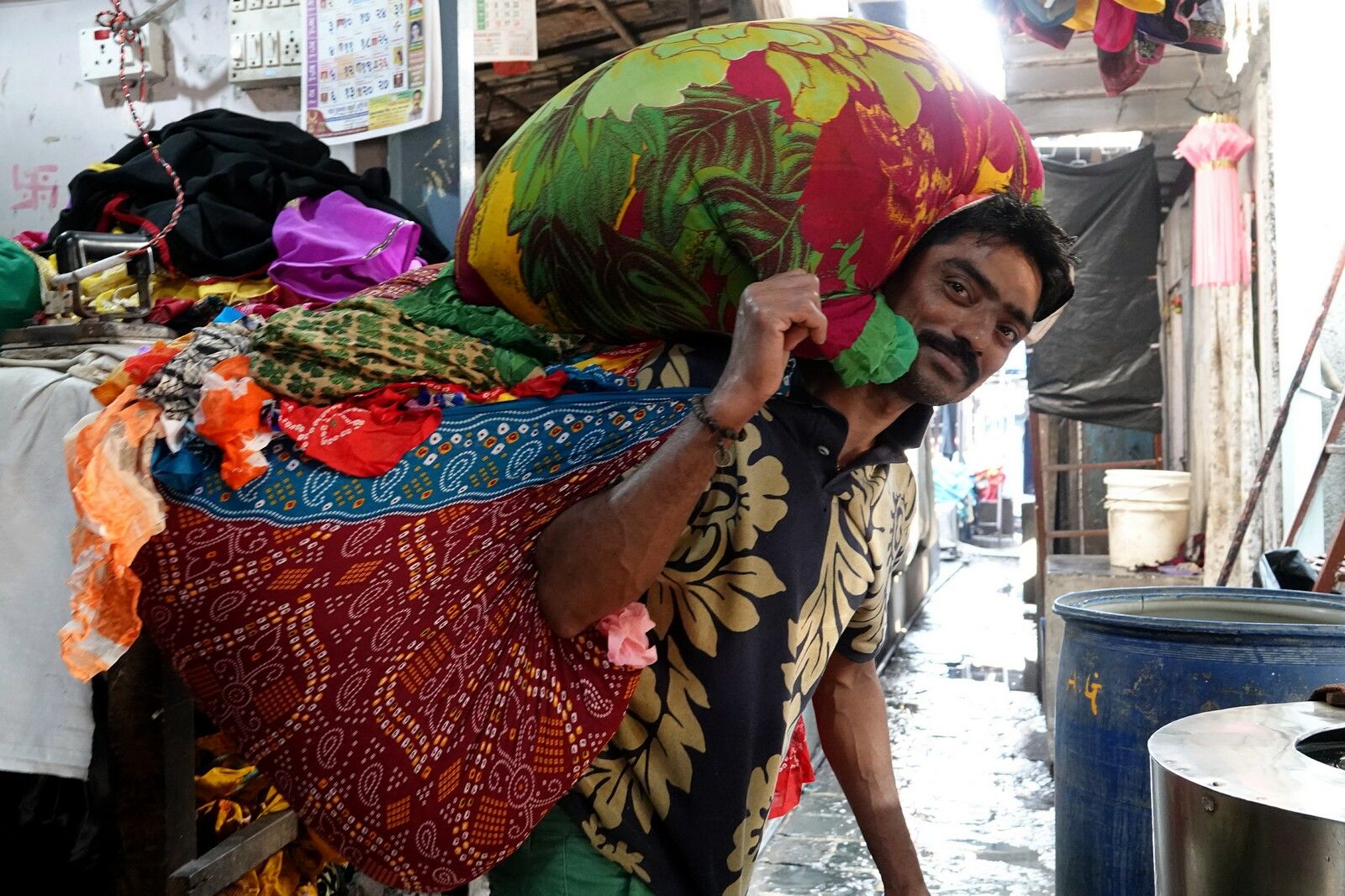
Thousand-person laundry
I once imagined this kind of slum-like laundry as too hard, but in fact, the life scene here is clean and orderly, and not as cluttered as it looks from a distance. People work, wash, talk and laugh, and drink tea here… Some of the more than 250 large washing machines and dehydrators roar and some stop quietly.
Gurmit said that everything that can be done by machines has been mechanized, and only special fabrics still need to be washed by hand, and sometimes they even have to be ironed straight with the most traditional charcoal iron.
Gurmit led me onto the roof terrace, and the square of jeans became the most unique scenery on the slope. A worker was drying clothes, and his wife brought Marsala tea and put it aside, then picked up the infant baby…
Thousand-person laundry
Time here flies very slowly, so slow that you can hear the gurgling sound of water and your own heartbeat, so slow that one greeting is not over yet, and another greeting has already sounded… The wind lifts the colorful corners of my clothes and trousers, and I can see the empty blue sky. I also see a warm picture of life.
Walking out of Dhobi Ghat, I paid the guide Rs 150, of which Rs 100 was an agreed gratuity and Rs 50 as a tip. Gurmit said that the money he earned for the hour he accompanied me was equivalent to seven hours of cleaning clothes.