| Holding Asia on the left and holding Europe on the right
The taxi sped along the wide, bright road, and the scenery outside the window was like a condensed trailer: the forest-like silhouettes of modern buildings kept appearing, competing with each other to show their vibrant lines until they stopped in front of a grand and futuristic landmark. This is the legendary boundary marker of Eurasia-its left side extends to Asia, and its right side connects Europe. According to the traditional map practice of “left west right east”, the orientation setting of this monument seems somewhat puzzling. But this can’t dilute the excitement that arises spontaneously in my heart at all: we started from distant China, crossed the vast hinterland of Asia, and now we are about to set foot on the land of Europa.
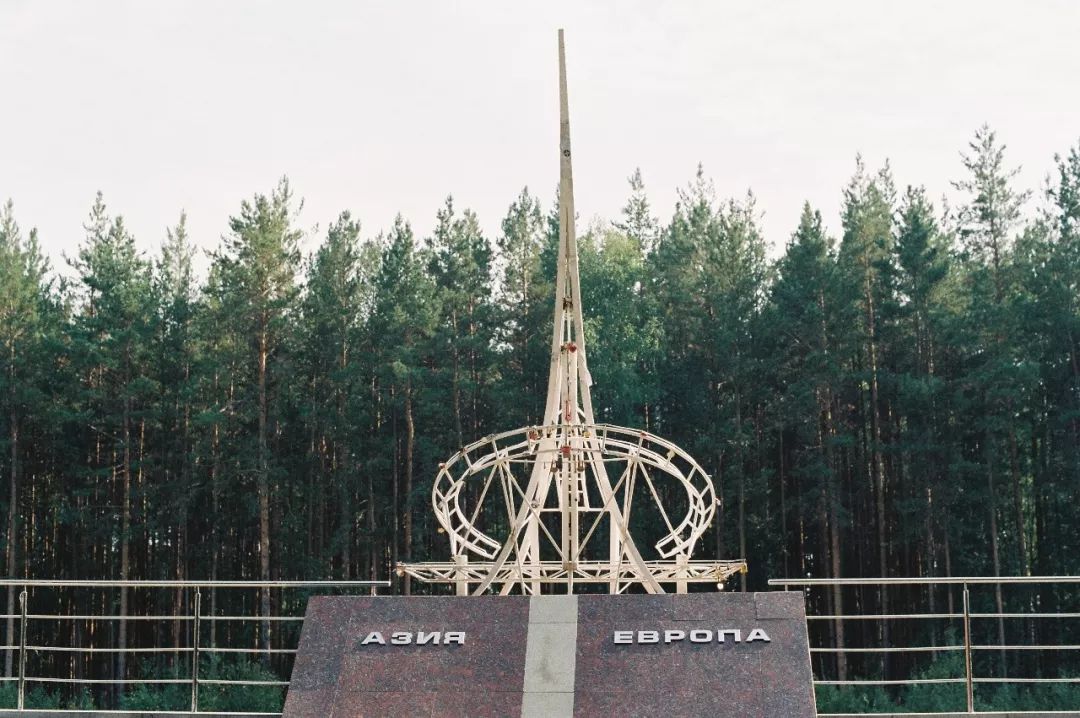
Eurasian boundary markers outside the city
This excitement quickly turned into countless freeze frames in the camera. In front of the boundary marker, you can strut into Europe with your head held high, or you can leap like a kangaroo. Of course, you can give full play to your creativity and complete a symbolic “crossing the continent” with various unique gestures. Perhaps for Russians, this dividing line marked by the Ural Mountains is as ceremonial as Mount Ararat in the Bible. It seems that once you cross, the vast and primitive Siberia behind you is just a particle of dust gently rising from the toe of your shoe.
At this time, when I walked into McDonald’s, which represents modern urban life, the real feeling of setting foot on European soil became clearer and clearer. The brand-new automatic ordering machine provides English service like timely rain, and everything seems to be “in sync with the international market”. It seems to announce silently that the idyllic Siberia is going away, and today’s Yekaterinburg has taken on a brand-new look.
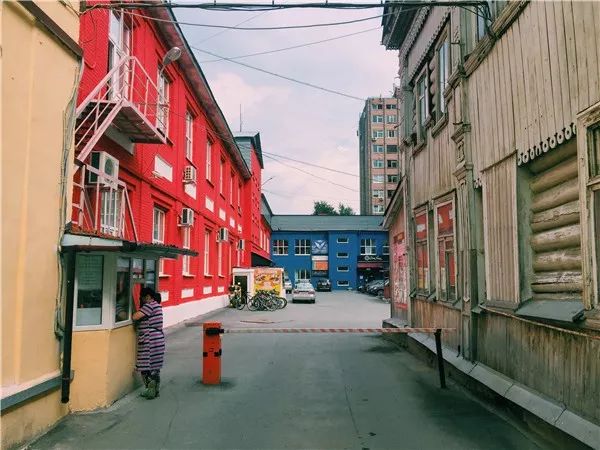
The colors of the city streets
But what’s the harm? It is in such a place full of “European style” that you can forget the passage of time and gaze absorbed at the pigeons jumping on the small round table. Their lives are long and leisurely, with a trace of fearlessness. No one would want to catch them for stew, their slightly clumsy plump figure seemed to be living evidence of the connivance of French fries and fried chicken.
Of course, there are still many corners in this city where you can find the old atmosphere. For example, go south along Sverdlov Street to visit the iconic skyscraper “Vysotsky” to remember a Russian “national icon”-Vladimir Vysotsky.
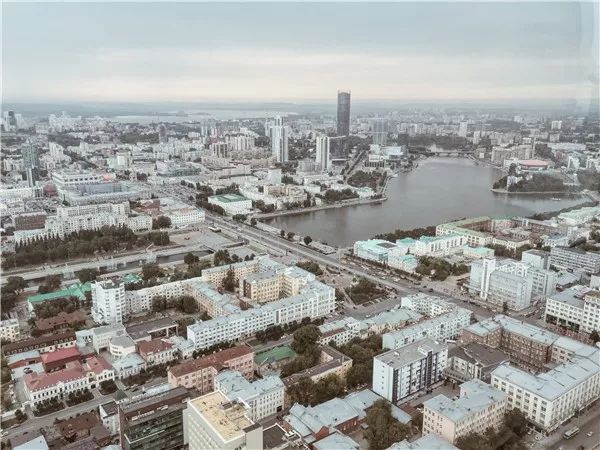
Standing on the top floor of Vysotsky Building, a bird’s-eye view of the city
This name obviously implies a lot. “Who is Vysotsky?” To borrow the words from a Russian memorial website: “He is the one who helps us live with poetry and singing.” You can give him countless titles: protest singer, troubadour, theater actor … But no matter what Vysotsky is, he represents a spiritual core of that particular era: sticking to ideals and criticizing reality. He used his songs to express the anguish of the people and expose the darkness of society. At the same time, like many great figures in Russian history, he was deeply attached to the land under his feet.
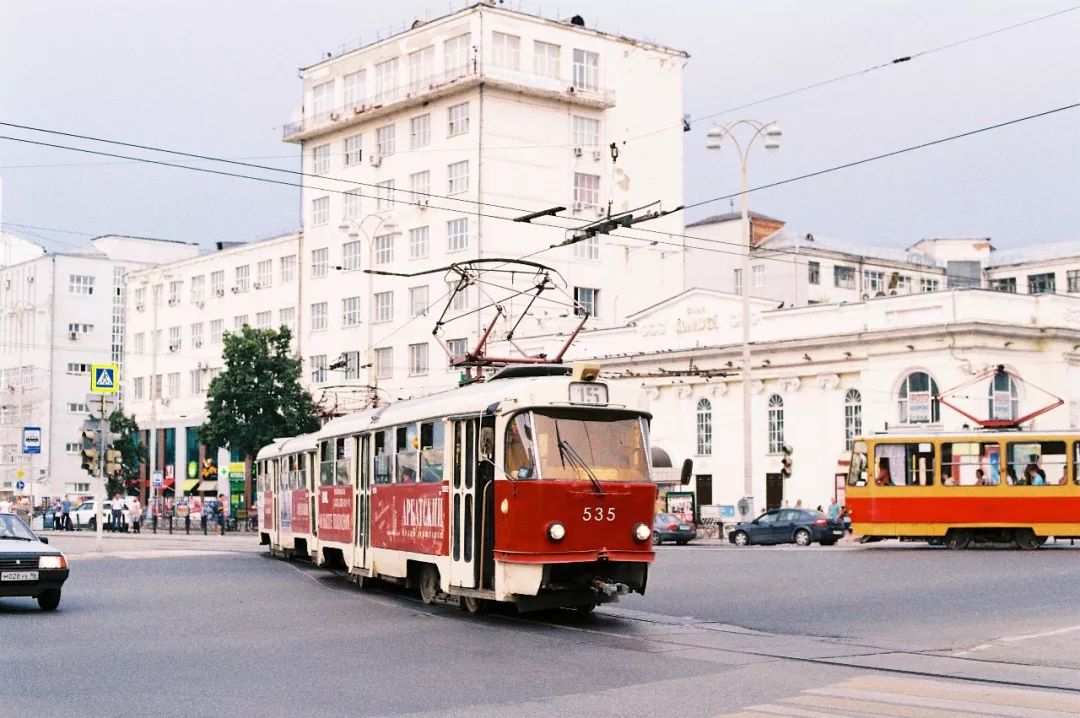
A tram passing through Lenin Street
According to a survey conducted by the Russian Center for Public Opinion Research, he, together with zhukov, a hero of the Great Patriotic War, and Gagarin, the first astronaut in space, was listed as the three most respected figures by Russians in the 20 th century.
At the same time, the Russian word “Vysotsky” (В ы с о ц к и й) itself means “high place”. If you can’t find this building, just look up and look for the tallest building in the city, and you will never get lost. Next to the entrance of the building, there is a small memorial museum of Vysotsky, which displays his famous Mercedes-Benz car, his wax figure and many daily necessities. However, this museum is not the most attractive thing about this skyscraper. Spending 250 rubles and taking the sightseeing elevator to the top floor is the supreme experience.
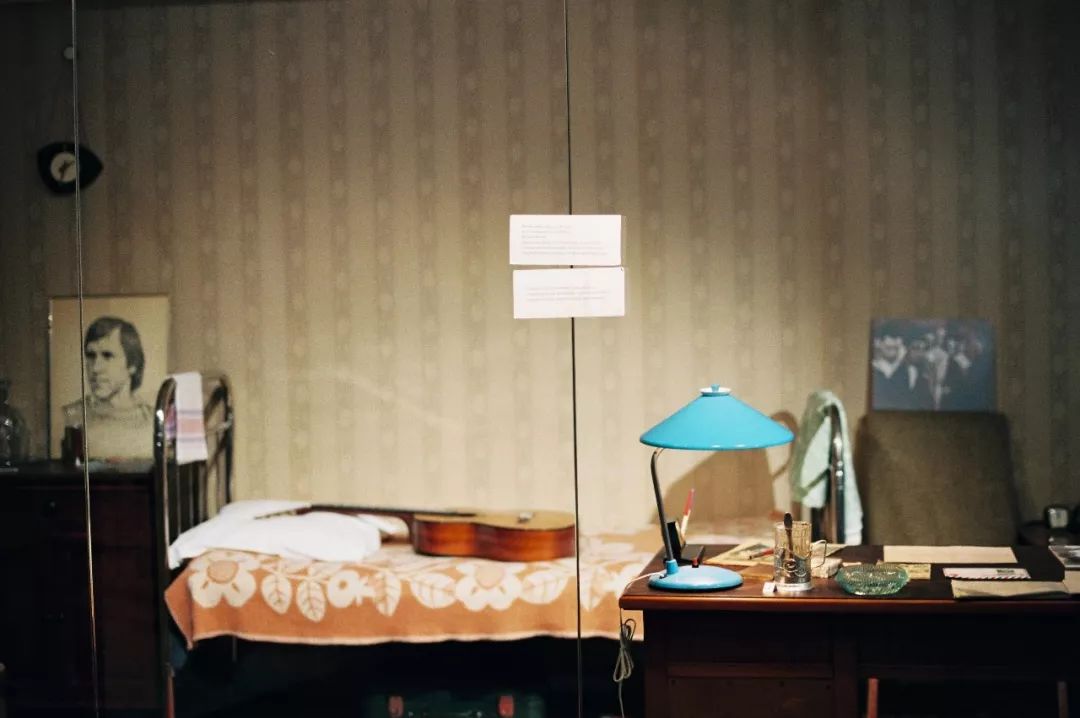
Exhibits in the Vysotsky Memorial Museum
The July breeze brushes the cheeks. The city lake in the setting sun is so calm that there is no ripple. Those cruise ships with colorful luster are like colorful paints inadvertently sprinkled on the canvas. The trams on Lenin Street, dragging their lazy bodies and squirming slowly, like lonely beetles. The old water tower stooped behind the huge residential complex built in the Soviet era. We have no way of knowing whether the praise that this is the best panoramic view of Russia’s cities is exaggerated. Even the reason why we came here seems to be guided by some kind of fate after mistake.
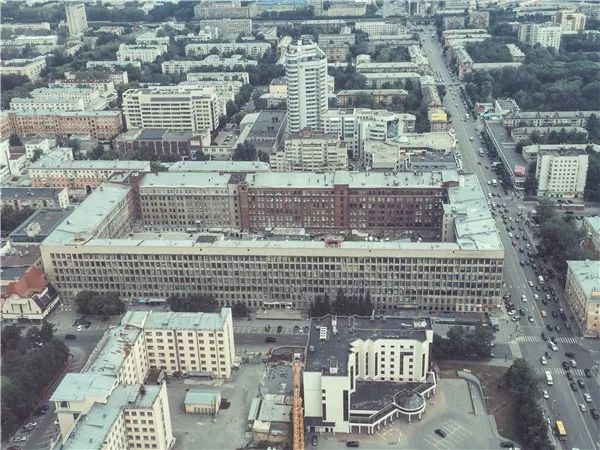
The magnificent Tai Wai Building of the Soviet era