“The night in Ulaanbaatar is so quiet and quiet, the conversation between the two people who meet each other is so sweet, the stars in the night sky find their own place and flash, wandering from the sweet family with pleasant melodies, the night in Ulaanbaatar is so quiet and the future is so beautiful…” Since the 1980 s, a song “Night in Ulaanbaatar” has been sung all over the world, and the dense and strong love has floated with ethereal voices.
Ulaanbaatar is the capital of Mongolia. As the national political, economic, cultural, transportation, industrial and scientific and technological center, it bears almost all the dreams and pressures of the whole country. It’s hard to imagine that a vast and sparsely populated country actually has half of the population crowded into the capital (the country has a population of 3 million, and nearly 1.5 million people live in Ulaanbaatar), while the population of the second and third largest cities is only more than 80,000. It’s no wonder that locals joked that Ulaanbaatar is “the only city in Mongolia”.
Under pressure, the glory and richness of Ulaanbaatar are undoubtedly the paradise in the heart of every Mongolian. This city with unique grassland style, founded in 1639, has also experienced the suffering baptism of modern political movements. There are not many tall skyscrapers in the city. Fortunately, some historical sites are still well preserved, and the modern buildings in the city center also have wonderful beauty. When the beautiful and luxurious traditional costumes meet the world fashion trend led by light luxury, the deduction is shocking visual enjoyment…
Let’s walk into the low-key and mysterious Ulaanbaatar together today.
Author: Huang Orange
If you want to know more about the strategy and itinerary, pay attention to Phoenix.com’s travel WeChat (travel _ ifeng) and reply to “Ulaanbaatar” to collect it.
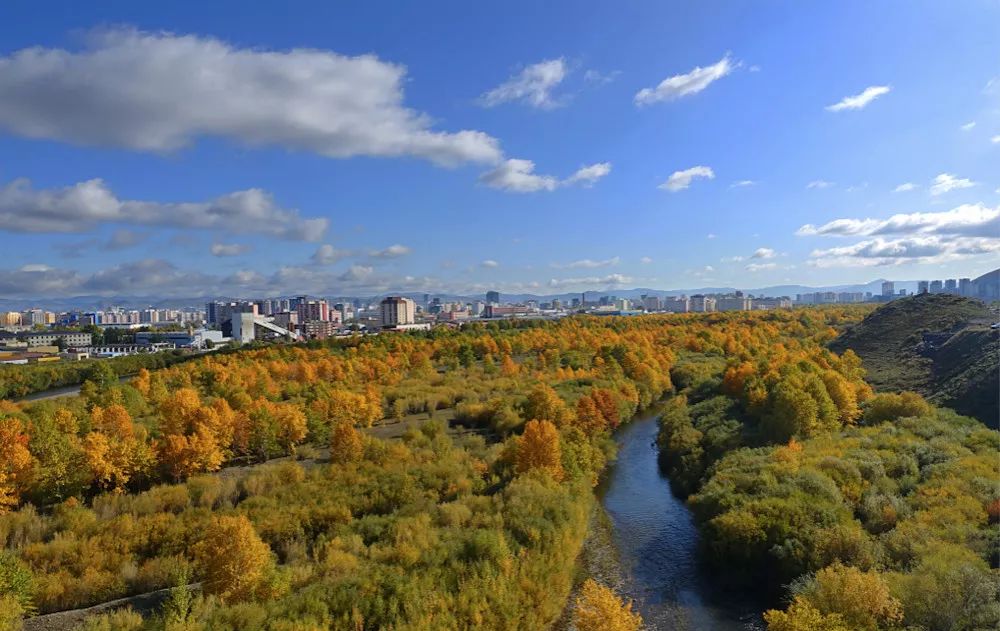
Ulaanbaatar
In the cold winter, ice and snow cover everything, the earth reflects the brilliance of crystal like glass, in the hot summer, flowers bloom, and chirping birds fly from afar. This is my hometown, the beautiful land of Mongolia. -Dahidorkin Nachukdorj
Ulaanbaatar is a modern city with rich grassland features. About 74% of its population are young and middle-aged, which makes it a young city in the eyes of the world. Ulaanbaatar is a small city area. The long and narrow city is surrounded by mountains such as Bayanjiruhe, Bogdahan and Qinggeltai. The clear Tula River flows slowly from east to west from the foot of Bogdo Mountain in the south of the city, witnessing the change of this city from a Buddhist holy place of nomadic people to the capital and largest city of Mongolia.
Sukhbaatar Square, located in the center of Ulaanbaatar, has now been renamed Genghis Khan Square. There is the National Palace in the north of the square, which is the office of the President and Prime Minister, the National Classical Art Theatre and the Central Cultural Palace in the east, and the Ulaanbaatar Municipal Government, the Central Post Office and other buildings in the west. Statues of founding father Sukhbaatar and ancestor Genghis Khan stand on the square, which tell the power and power of Mongolia magnificently. Gandan Temple, also located in the center of the city, is the largest existing Tibetan Buddhist temple in Mongolia today. Because of its unique religious charm and temple culture in the same strain, it has become an important memory symbol of Mongolian traditional culture and religion.
In recent years, Ulaanbaatar has experienced a cultural renaissance, with a large number of museums, art galleries, theatre performances and clubs emerging, fully demonstrating the most beautiful side of traditional Mongolian culture. Twelve museums, such as Bogdohan Museum and Qiaojinzama Museum, enjoy a high reputation at home and abroad. Here, you will feel the cultural soul composed of urban nomadic cultural feelings and have a new understanding of mysterious Mongolian art.
Ulaanbaatar has extensive nature reserves in the east and west directions, where you can get to know the precious wild horses in Mongolian grassland at close range, or wander among the towering mountains, dense forests, gurgling rivers, and unique natural landscapes such as Sanyou Cave and Turtle Stone.
Real Ulaanbaatar, beyond your imagination.
Genghis Khan, a god-like existence
For the Mongols, Genghis Khan, the world overlord in the 13 th century, will always be their hero. They eagerly printed Genghis Khan on vodka bottles, cigarettes, chocolate bars, or embroidered on tapestries, and named the only international airport Genghis Khan International Airport.
Most interestingly, the grand square in the center of Ulaanbaatar was originally named after the founding father Sukhbaatar. Since 2006, in order to commemorate the 800 th anniversary of Genghis Khan’s accession to the throne, Mongolia built a bronze statue of Genghis Khan in the north of the square next to the presidential palace, and this national symbolic square has gradually been called Genghis Khan Square.
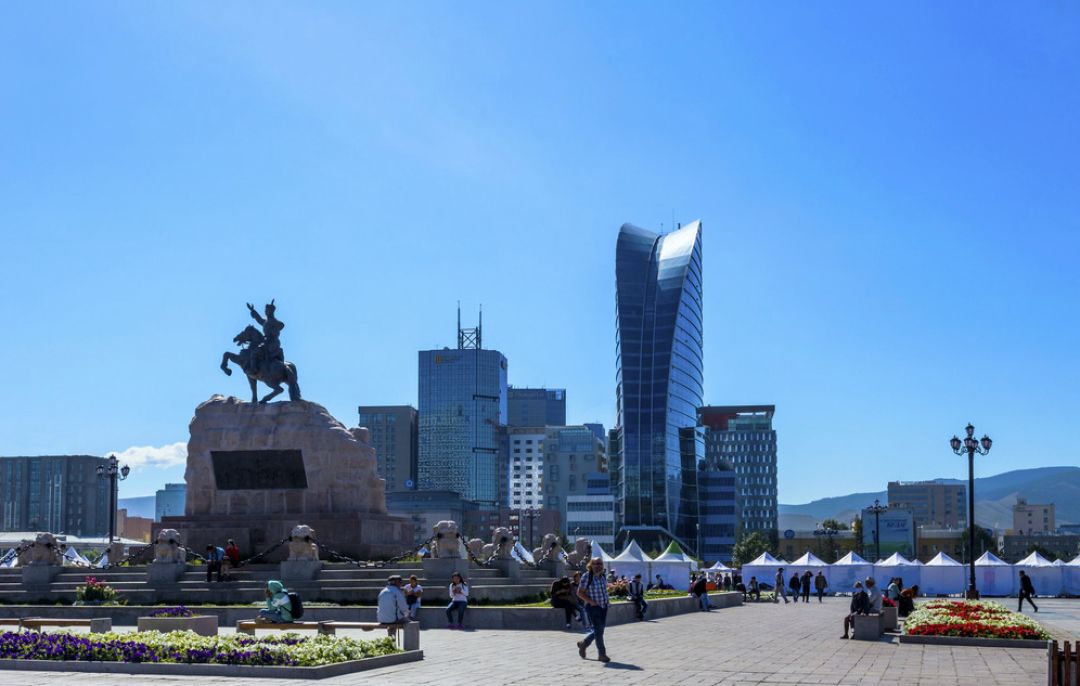
Ulaanbaatar
Unless there are festivals or large gatherings, Genghis Khan Square always appears empty and quiet. It is a good place to enjoy Mongolian historical buildings and observe the rich expressions of Mongolians. It is common for local people to take group photos in front of the bronze statue of Genghis Khan in groups of three or five, either for their children’s rite of passage, or for their own anniversary or their relatives and friends… Most of them appear in the square in dress, wearing traditional costumes with dazzling colors such as robes, belts, boots, jewelry, etc., while wearing modern costumes with suits and leather shoes, and fashionable clothes.
Mongolian facial features are very obvious: high cheekbones, slender eyes, and a round and fleshy face or full of vicissitudes. Perhaps because the long-term grassland life makes people accustomed to quietness, they are not noisy even if many people are together.
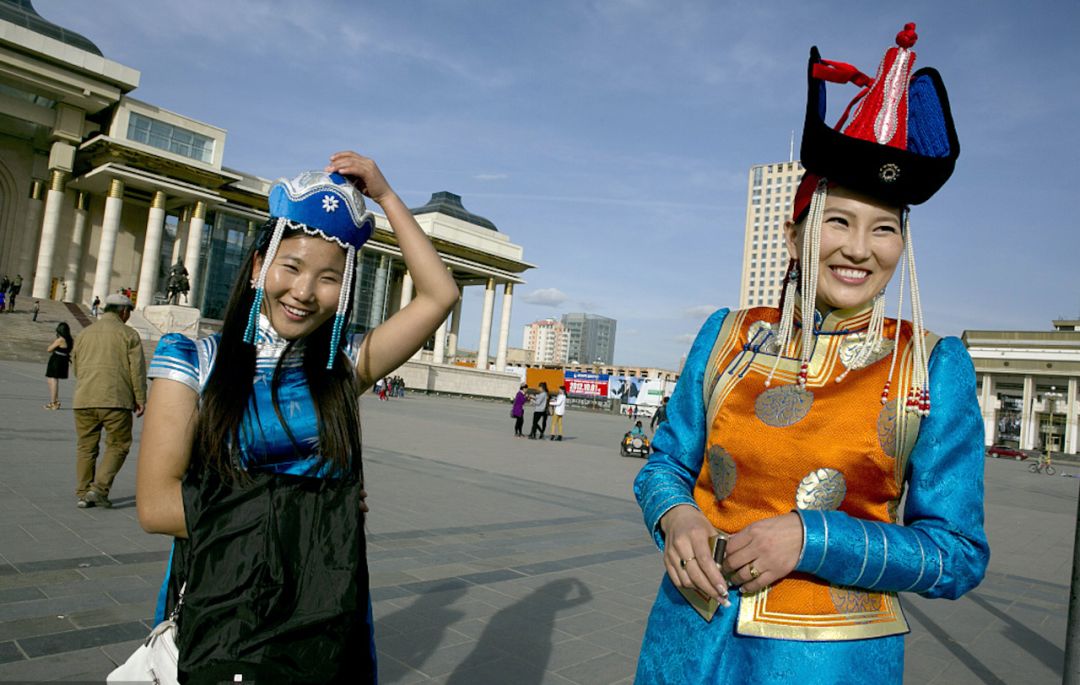
Genghis Khan Plaza
The bronze statue of Genghis Khan is located in the north of the square. On his east and west sides, there are statues of Kublai Khan and Wokuotai respectively. The northeast of the square is a cultural palace with a strong modern flavor, and it is also the seat of Mongolian National Modern Art Gallery and other cultural institutions. In the southeast corner of the square, there is a Greek-style building with the white edge of *, like a dream castle. After inquiring about it, I found out that it is the National Opera and Ballet Theatre. The earthy red building in the southwest is the Mongolian Stock Exchange, and the adjacent building with a clock tower is the Central Post Office. Mongolia’s zero-kilometer benchmark is also hidden in the corner of the square-this is the veritable geographical center of Mongolia.
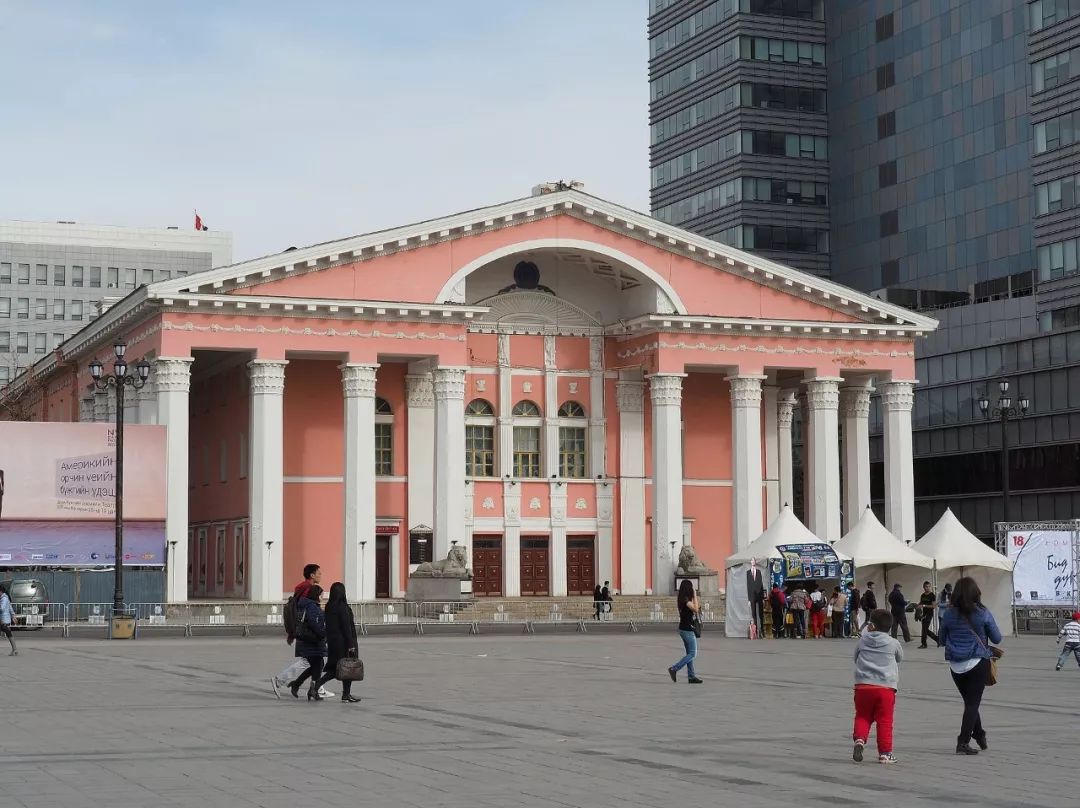
Genghis Khan Plaza
More than 30 kilometers away, there is the equestrian statue of Genghis Khan, which entered the Guinness Book of World Records in *. This stainless steel statue is 40 meters high and weighs 250 tons. It was also built to commemorate the 800 th anniversary of Genghis Khan’s accession to the throne, and has become a new symbol that Mongolian people are proud of.
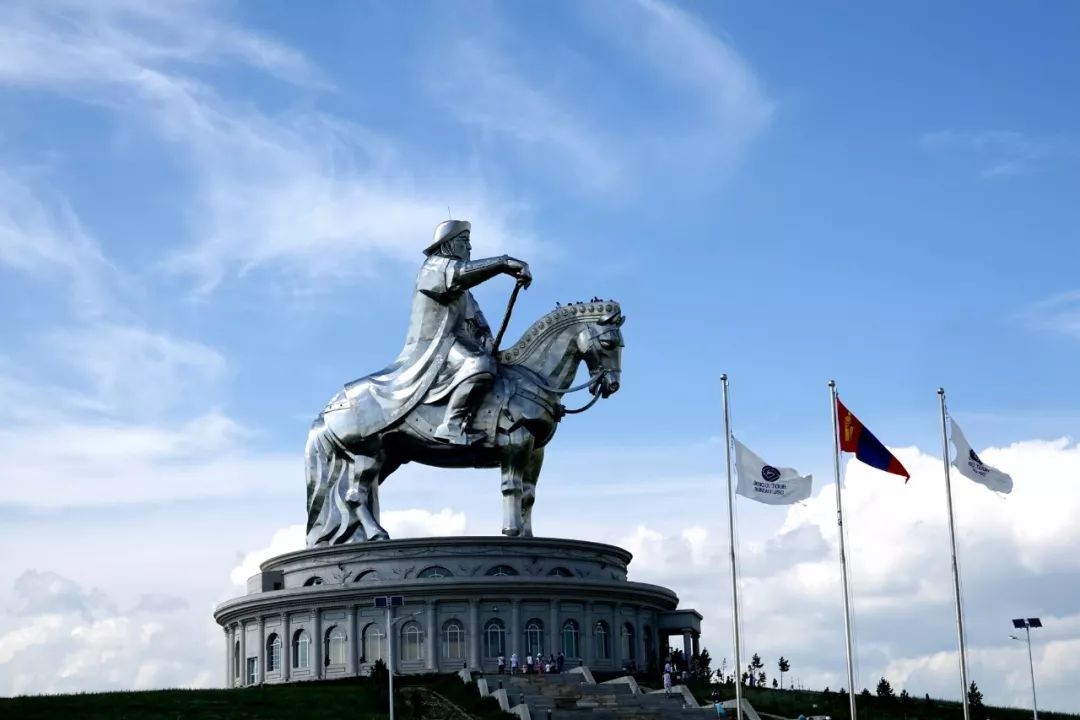
Equestrian statue of Genghis Khan
The circular pedestal at the foot of the statue is the Genghis Khan Museum, which displays many historical pictures and texts related to Genghis Khan and precious cultural relics of Mongolian nomadic culture. Besides ancient weapons, there is also a 9-meter-high leather boot made of 225 cowhide, which is said to be the largest leather boot in the world.
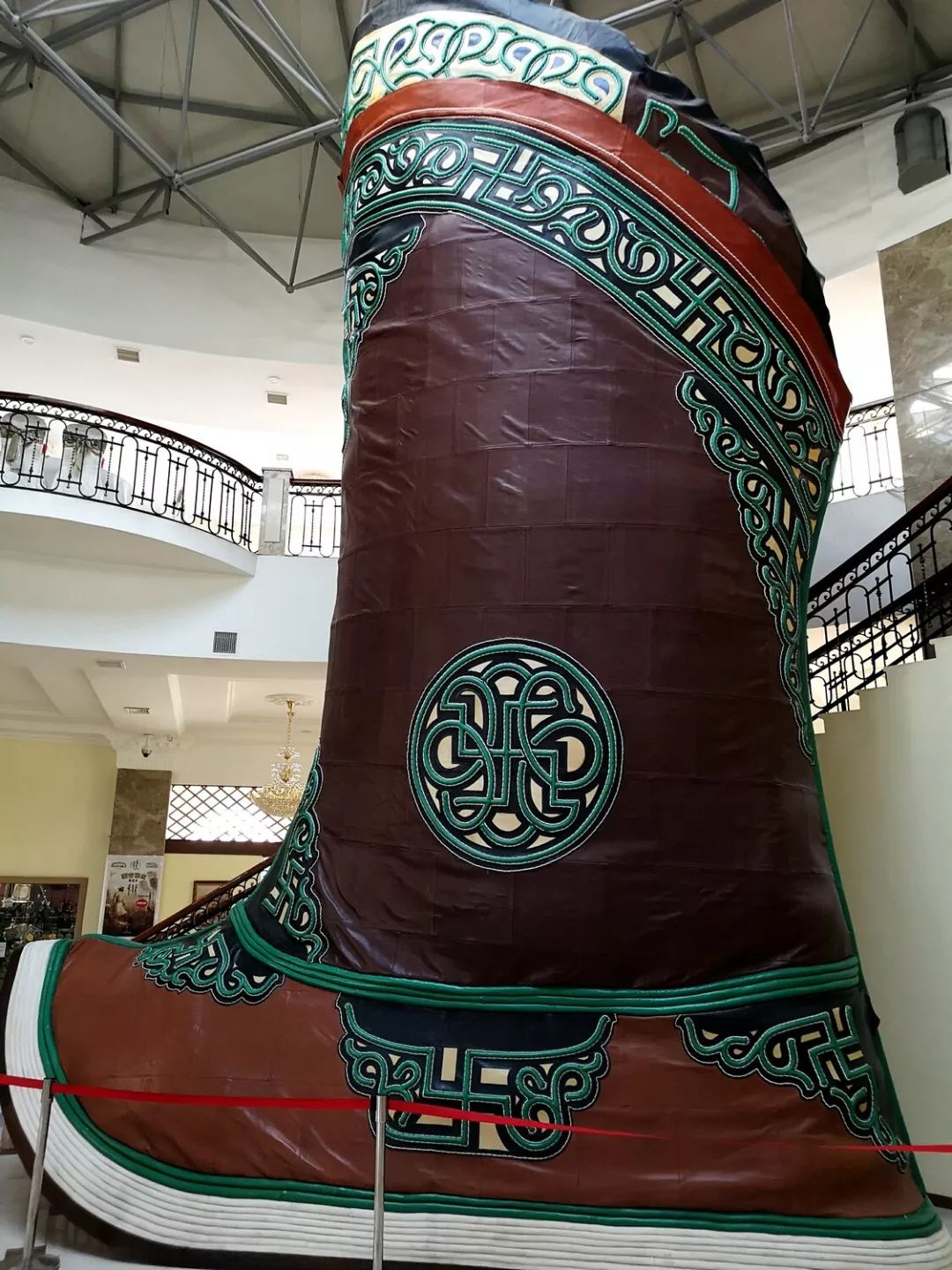
Genghis Khan Museum
There is also a huge riding whip that is more than 3 meters long next to the boot. There is an elevator behind the whip that leads directly to the neck of Genghis Khan’s mount. Follow the stairs to reach the viewing platform on the horse’s head. Here, you can look around the vast and lush prairie. Following the direction of a generation of Tianjiao’s eyes, you can see his birthplace and the bonfire smoke that swept across Asia and Europe 800 years ago.