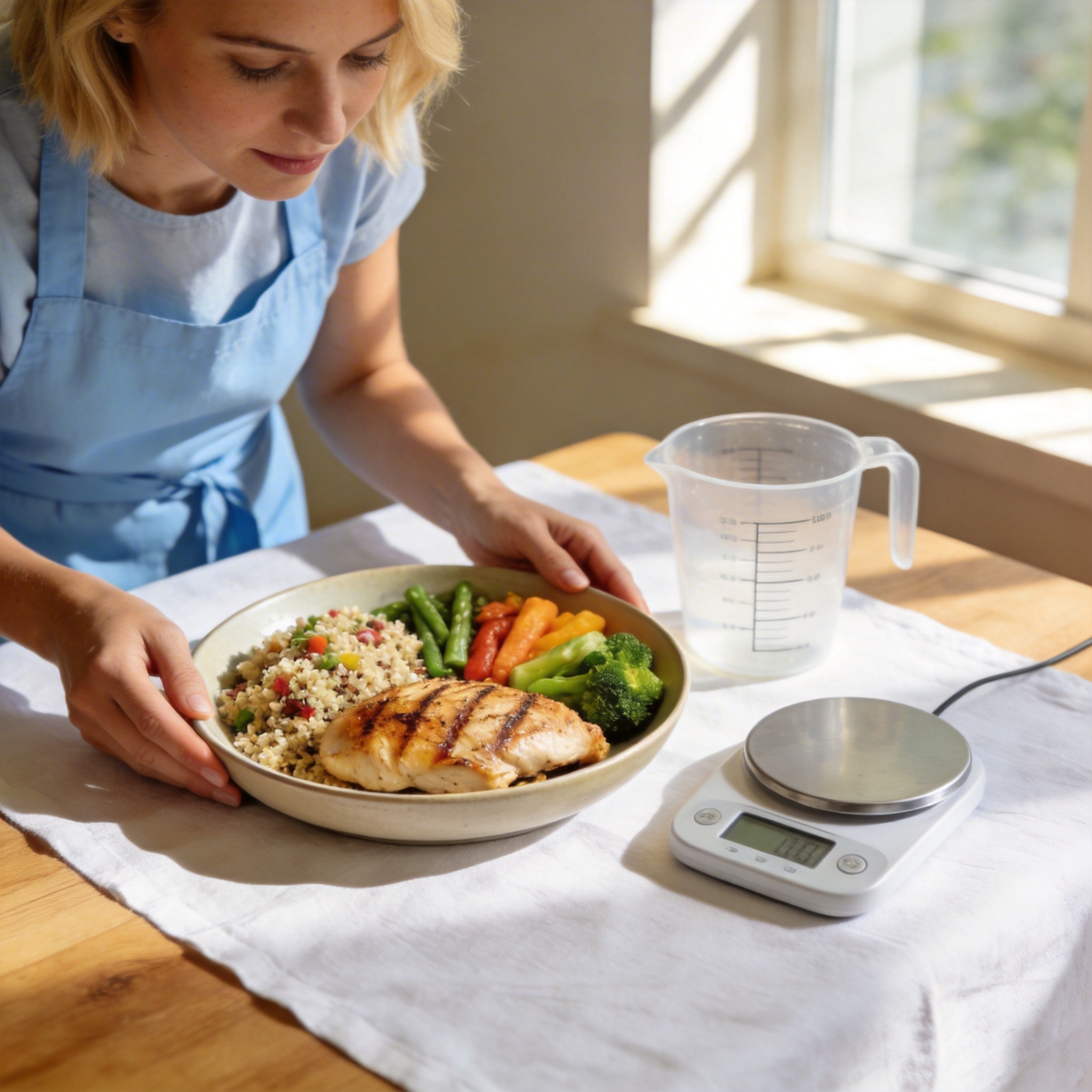
Achieving and maintaining a healthy weight often hinges on one crucial habit: portion control. While calorie counting can be effective, understanding portion sizes is equally important. This article will explore practical tips to help you manage your food intake effectively, ensuring you enjoy balanced meals without feeling deprived.
Understanding Portions
The Basics of Portion Control: Portion control involves being mindful of the amount of food you consume in relation to your nutritional needs. It’s not just about eating less but also about making healthier choices. By learning to recognize appropriate portion sizes, you can better manage your calorie intake and support your health goals.
- Visual Cues: Use plates, bowls, or measuring cups as visual guides. For instance, fill half your plate with vegetables, a quarter with lean protein, and the remaining quarter with whole grains.
- Meal Prep: Preparing meals in advance helps control portions. Cooking extra servings and freezing them ensures you always have healthy options ready.
- Mindful Eating: Pay attention to hunger and fullness cues. Eat slowly, savor each bite, and stop when you feel satisfied, not overly full.
Practical Strategies for Success
Using Smaller Plates and Bowls: Switching to smaller dishes can subconsciously reduce the perceived size of your meal. Studies show that using smaller plates can lead to a 22% reduction in calorie intake at meals.
- Portion-Control Appliances: Invest in kitchen tools designed to measure portions accurately. Examples include measuring spoons, scales, and portion-control containers.
- Read Food Labels Carefully: Be aware of serving sizes listed on nutrition labels. Often, what seems like a small package contains multiple servings.
- Eat More Protein: Protein-rich foods are filling and can help you feel fuller for longer. Include sources like chicken, fish, beans, and lentils in your meals.
Overcoming Common Challenges
Social Eating Scenarios: Dining out or attending social events can make it challenging to maintain portion control. Here are some strategies to navigate these situations:
- Order Smart: Choose grilled or broiled items instead of fried ones. Request dressings and sauces on the side to control how much you use.
- Share Dishes: Consider splitting large entrees with a dining partner. This allows you to enjoy a variety of foods without overeating.
- Be Mindful of Beverages: Alcohol can impair judgment and contribute to overeating. Stick to water or unsweetened beverages during meals.
Handling Stress and Emotional Eating: Stress and emotions can trigger unhealthy eating habits. Practice mindfulness techniques such as deep breathing or meditation to stay present and avoid emotional overeating.
Conclusion
Mastering portion control is a key component of a healthy lifestyle. By implementing the tips outlined in this article, you can develop better eating habits that support your overall well-being. Remember, progress is more important than perfection. Start small, stay consistent, and celebrate each step forward. With time and practice, managing portions will become second nature, leading to a happier, healthier you.